
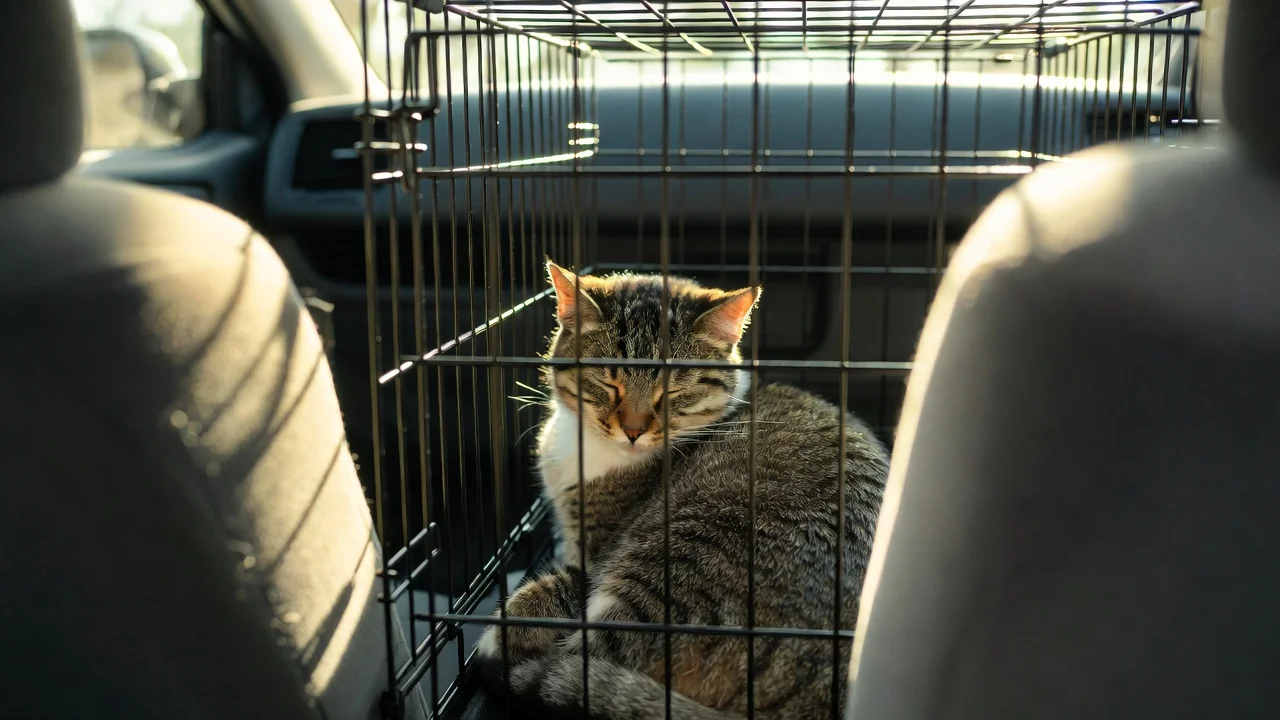
Dreading a long road trip with a screaming cat? You’re not alone.
Most owners brace for a nightmare, but science shows that car anxiety is just a biological reaction you can actually control. You don’t need magic tricks or risky sedatives to keep them calm.
By understanding a few simple, expert-backed rules about how cats process stress, you can make the drive safe and quiet. Let’s dive in.
The Big Takeaways Before We Hit the Road
- 59% of cats will visibly freak out during car travel. We’re talking vocalizing, panting, and pacing. Don’t feel guilty—this is normal physiology, not a sign you failed at training them.
- Your cat literally cannot use a litter box in a moving car. Their stress response physically locks their system down. You have to plan your entire trip around this one biological fact.
- Not being able to pee is a veterinary emergency. If you’re on a multi-day trip and don’t have a secure overnight stop for them to decompress, you are putting them at serious medical risk.
- Driving solo? You need a backup physical key. Leaving your cat in a locked, running car while you pump gas is the absolute only safe way to do it.
- Gabapentin is a lifesaver, but you need a test run. Give them a home test dose at least a week before you leave. Trust me, you do not want to find out how your cat reacts to medication at mile 400.
Why That First Hour is Make-or-Break (And How to Hack It Before You Leave)
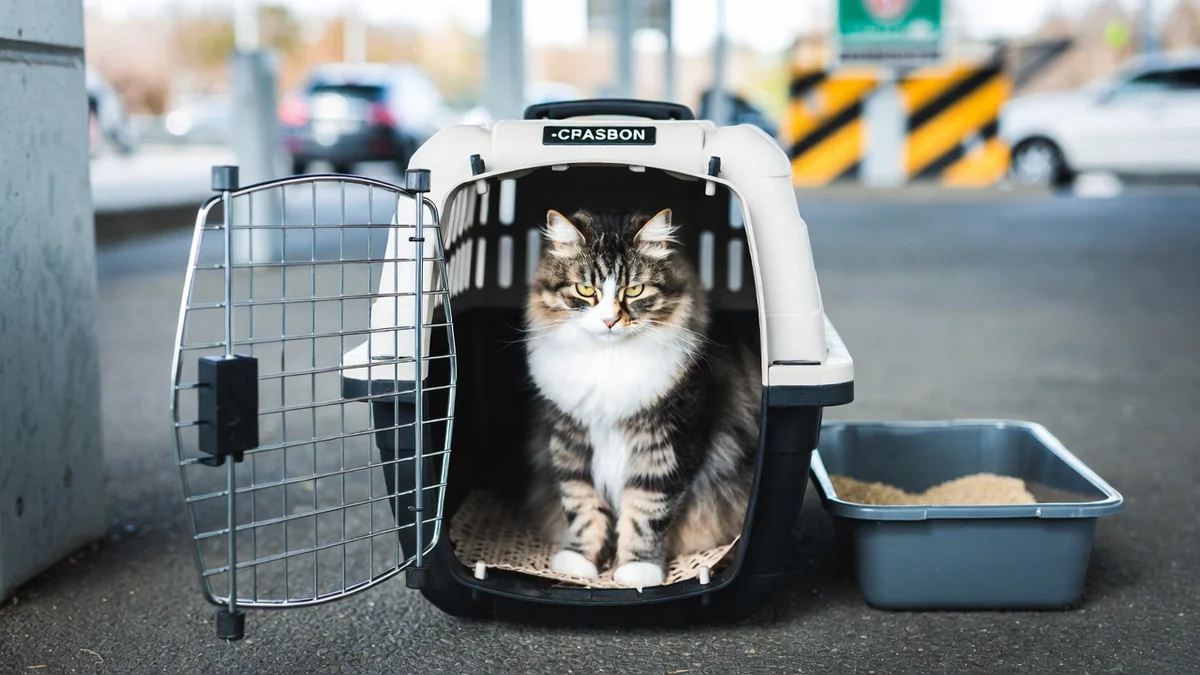
Here is a crazy fact: the first hour of your trip is when your cat’s stress hits its absolute peak. And your only real window to fix it? It closes days before you even start the engine.
Within minutes of pulling out of your driveway, your cat realizes their familiar territory is gone. This triggers a massive red alarm button in their brain. It’s called the sympathetic-adrenal-medullary (SAM) axis—a super-fast survival response that commands the adrenal glands to flood their little body with adrenaline. Their heart rate explodes. Their breathing goes into overdrive. When they start yowling, they aren’t complaining about your driving; their nervous system has literally classified your moving vehicle as a deadly predator.
Once you survive that first hour, this acute panic hands the baton to a slower, grinding stress system known as the HPA axis. This system pumps out cortisol, which completely shuts down their digestion. So when your cat refuses to eat or drink on the highway, they aren’t throwing a tantrum. It’s just pure chemistry.
The 10-Hour Difference: Car-Trained vs. Zero Experience
Think of it like this: a cat that has been in a car before has a much lower alarm threshold. Their brain looks at the vehicle and says, “Oh, it’s this weird vibrating box again,” instead of “We are going to die.” They might still meow, but the panic doesn’t peak as high, and they settle down much faster.
But a cat with zero car experience? They hit maximum panic instantly and stay there. If you’re driving 10 hours, that translates to a miserable trip: vomiting, scratching at the carrier walls until they hurt themselves, and arriving so stressed out that it takes them days to recover.
Here is the pro-tip: if you have 2–4 weeks before your trip, pick the carrier first—the exact one your cat will ride in all day (here’s how we’d choose one for a long haul)—and leave it out daily. Take them on two or three 15-minute drives, then graduate to a 1-hour drive. If you’re moving in less than a week? Do what you can, but you should seriously talk to your vet about medication.
The Blank Slate: Why Pure Indoor Cats Need a Totally Different Approach
Most travel advice assumes your cat knows what the outside world sounds like. But if you have a 100% indoor cat, they don’t have that context. To them, the car isn’t just a new room; it’s an alien spaceship bombarding them with terrifying noises and smells.
You have to start earlier and go much slower. Put the carrier right in the middle of their living room a full week before the trip. Feed them inside it. Let them claim it as their own safe fortress before you ever introduce engine noise. When you finally do that first practice drive, keep it under 10 minutes and go straight back home.
Truth Bomb: Your Cat Is Not Going to Use the Litter Box While the Car is Moving
We need to talk about the litter box, because this blows a lot of people’s minds. Cats physically cannot pee while their stress response is active. They aren’t holding it to spite you; their nervous system is literally barricading the door.
When a cat is stressed, their lumbar sympathetic nerves actively inhibit the bladder muscle and lock the bladder outlet shut. The sphincter clamps completely closed. So, putting a litter box inside the carrier while you’re driving 70 mph down the interstate? You’re asking their biology to work in reverse.
The Wild Biology Behind Why Stressed Cats “Hold It”
It’s simple evolution. In the wild, a prey animal that stops to pee in the open is going to get eaten. Since the car’s noise and vibration simulate a massive threat to your cat’s brain, their body decides that going to the bathroom is strictly non-essential. That sphincter stays locked until the “threat” is gone.
What does this mean for your road trip? An inability to urinate is a life-threatening veterinary emergency. If you do a single-day drive of 8–10 hours, you’re keeping your cat within a safe biological window. But trying to push a two-day drive without letting them out in a secure, quiet hotel room overnight? That’s a recipe for disaster.
| Biological Risk | Safe Window | Critical Point | Consequence |
|---|---|---|---|
| Urine retention | < 12 hours | Inability to urinate = emergency | Uremia, kidney injury, FIC |
| Fecal retention | < 48 hours | > 72 hours | Megacolon, obstipation |
| Vehicle heat (engine off) | < 5 minutes | 30 minutes (+34°F) | Hyperthermia, organ failure |
| Sustained stress hormones | 0–1 hour | > 8 hours continuous | Immune suppression, bladder inflammation |
Ditch the Box in the Carrier: Here’s What Actually Works at Rest Stops
Do yourself a favor and skip the litter box inside the carrier during the drive. It’ll just spill and choke your poor cat with dust. Instead, toss in a worn t-shirt that smells like you, or a familiar fleece. If you have a wire crate, attach a spill-proof water bowl.
Save the litter box for the rest stops. When the engine is off and the car is finally still, your cat gets a tiny neurological window to relax. Keep the car doors closed, open the carrier, place the box right at the entrance, and just give them 10–15 minutes of total peace. Honestly, many still won’t use it. But don’t panic—as long as you’re doing a single-day trip, they are still in the safe zone.
For hotel nights, the box goes in the bathroom with the door shut. We’ll get to the hotel survival guide in a bit.
When and How Often to Pull Over: A No-Nonsense Game Plan
You might think you’re doing your cat a favor by stopping every hour to let them “stretch.” Science says otherwise. A cat can easily handle 8–10 continuous hours in a comfortable car. Pulling a terrified cat out of a carrier at a chaotic highway rest stop? That just hits the reset button on their stress cycle.
Every time you kill the engine and open the doors, highway noise floods in, and you’ve just prolonged their ordeal. Plus, a parked car with the engine off rises 34°F inside within 30 minutes regardless of outside temperature. So when you stop, do it for thermal safety and your own bathroom breaks—not because you think your cat wants to see the sights.
The “500 Miles a Day” Rule (And the Math Behind It)
If you ask the veteran travelers on Reddit, you’ll hear the “500 miles per day” rule. And the math backs it up perfectly. 500 miles at highway speeds takes about 7–8 hours. This keeps your cat safely inside that 8–10-hour biological window we talked about, leaving just enough buffer for gas stops without pushing their stress clock over the edge.
You can drive longer, but you have to be obsessively careful about the car’s temperature, and accept that your cat will be maxed out on their daily tolerance.
Reading the Room: What Your Cat’s Silence or Panting Actually Means
If your cat is yowling for an hour and suddenly goes quiet, don’t celebrate just yet. It usually doesn’t mean they’re relaxed; it means they’ve hit the cortisol plateau. The initial panic is gone, and now they are just grinding through the stress. They are fatigued. Just keep driving.
However, if you see open-mouth panting (cats don’t pant like dogs—this means extreme heat stroke or panic), if they are violently throwing themselves against the carrier, or if you notice they’ve soiled their bedding (meaning they completely lost sphincter control), pull over immediately. Something is wrong.
Solo Road Tripping With Your Cat: The Ultimate Co-Pilot Survival Guide
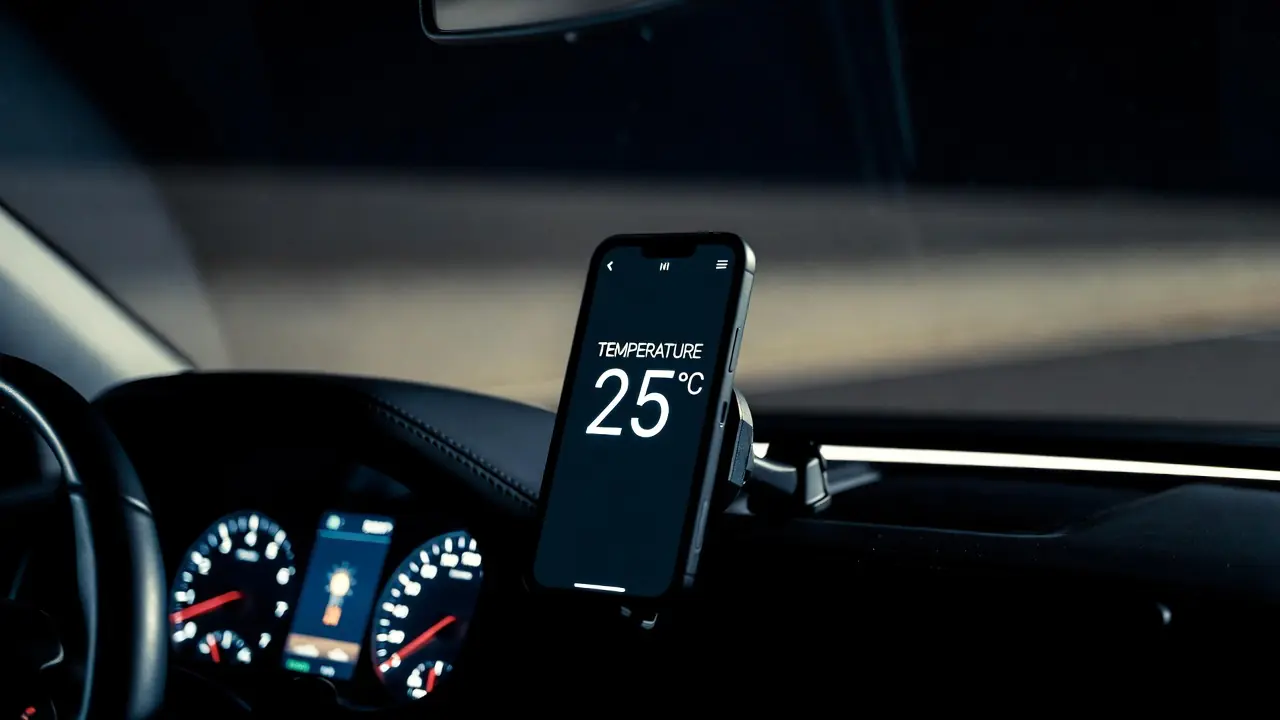
If you’re making this journey solo, the game changes entirely. You are the only line of defense, and you face two massive risks that no amount of cat-soothing will fix: deadly temperatures at gas stops, and the risk of your cat escaping every time you open a door. You need a strict protocol, not improvisation.
Oddly enough, most articles skip this part, which is wild considering how many of us move across the country by ourselves. Let’s fix that.
The Double-Key Trick: Keeping the Car Cool at Gas Stations
Welcome to the Double-Key Method. You need two physical keys in your hand before you leave your driveway: the one in the ignition, and a spare for the door.
When you pull into a gas station, find a visible pump. Leave the engine running with the AC blasting. Check your cat in their hard-sided crate. Step out, close your door, and use your second key to lock the car from the outside. This guarantees the cabin stays cool without trusting finicky electronic fobs.
You have a 5–10 minute window outside. Pay at the pump. Use the restroom before you pump gas, not after. Solo drivers swear by this routine.
Listen, even if it’s a beautiful 75°F day, cracking a window does absolutely nothing to stop the sun from baking your car. It can reach lethal temperatures in 15–20 minutes. The engine-on protocol is your only safe bet. (If you drive an EV or a car that won’t let you lock it while running, figure out your app’s climate control settings before you’re stranded at a pump in Nevada).
The “Airlock” Protocol: Preventing Heart-Stopping Escapes
I call this the Airlock Rule. Think of your car like a spaceship: only one barrier can be open at a time.
Vehicle doors closed? You can open the carrier. Carrier door closed? You can open the vehicle doors. These two things must never overlap.
At a rest stop: Park the car -> Keep car doors closed -> Open the carrier to offer the litter box -> Close the carrier -> Then open your car door to stretch your legs.
If a panicked cat bolts at a highway rest stop, their chances of survival depend entirely on how fast they hit a fence line. The airlock method guarantees they stay safe. If you’re an RV camper dealing with campsite escapes, the exact same logic applies. We break all of that down in our guide to RV camping with cats covering acclimation, temperature safety, and campsite escape prevention.
Let’s Talk Meds: What Vets Actually Give for Road Trips (And Why)

Let’s talk about the magic pills. Gabapentin is the undisputed champion that vets reach for, yet so many generic guides barely mention it.
“Gabapentin and dog crate,” wrote one road-warrior commenter who survived two massive moves (1,200 miles and 2,000 miles). “Stopped overnight once for the shorter move and twice for the other. Plan ahead and have a reservation at a hotel that definitely takes cats. Pet friendly often means dog friendly.” That’s verified wisdom across 3,200 miles of driving in two sentences.
Gabapentin vs. The Rest: Why It’s the Undisputed Champion of Travel
Here is the science: a brilliant 2017 clinical trial proved that a single 100 mg oral dose of gabapentin significantly reduced fear responses during transport. It peaks at 2–3 hours and wears off beautifully around the 8-hour mark. Older sedatives used to just paralyze the cat’s body while their brain remained terrified. Gabapentin is different. It works upstream, literally quieting the nerve signals that cause fear. Your cat is actually less afraid, not just trapped in a sleepy body.
Other drugs? Buprenorphine is unpredictable for long drives. Alprazolam (Xanax) can trigger a “paradoxical excitation” in some cats—meaning it makes them more frantic instead of calming them down.
Gabapentin might make them a little wobbly or drooly, but it’s temporary, dose-dependent, and incredibly safe for their heart.
| Medication | Onset | Peak Duration | Sedation | Key Risk |
|---|---|---|---|---|
| Gabapentin | 1.5–2 hrs | 6–8 hrs | Mild–moderate | Wobbliness, drooling (dose-dependent) |
| Buprenorphine | 30–60 min | 4–6 hrs | Moderate | Variable duration; opioid overdose risk |
| Alprazolam | 30–60 min | 4–6 hrs | Variable | Paradoxical excitation in some cats |
The “Dry Run”: Why You Must Test the Dose a Week Early
You must—and I mean must—do a dry run at home at least 7 days before you leave. This is non-negotiable.
Every cat metabolizes drugs differently, especially older cats with weaker kidneys. A dose that makes a young cat take a nice nap might knock a senior cat out cold for hours. You need to know exactly how your cat reacts while you are safely at home, not 400 miles down the highway.
What to look for: a little unsteady walking and glassy eyes? Totally normal. That’s the drug working. But if they can’t lift their head, won’t respond to you, or are struggling to breathe, call your vet immediately. And if they go hyper and frantic (that paradoxical effect we mentioned), gabapentin isn’t the right choice for them.
On the big day: pull their solid food 3–4 hours before you leave so they don’t get carsick. Give them the pill 2–3 hours before they go into the carrier. You want that peak calmness active before the terrifying car ride starts, not after.
Always consult your vet before giving gabapentin or any other medication.
Surviving the Hotel Night: The Hidden Dangers in Plain Sight
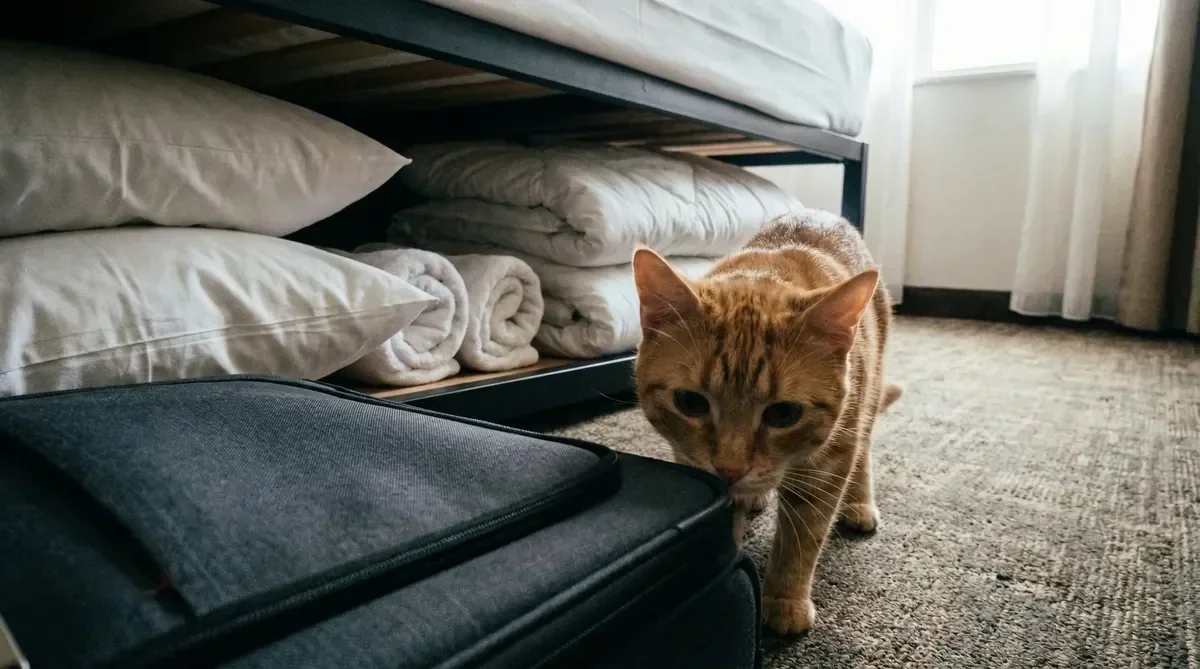
A hotel room looks like a safe haven to you. To a stressed cat, it is an obstacle course of dark, inaccessible voids—and the gap under the hotel bed is their ultimate prize.
Trust me, trying to extract a hissing cat from the inner structural supports of a commercial hotel bed at 7:00 AM is a 45-minute nightmare. You’ll be taking apart furniture and missing your checkout time. But preventing it? That takes exactly three minutes.
Before you even touch the carrier door, inspect the room. Look under the bed, behind the headboard, and under the bathroom sink. Grab every spare pillow, blanket, and rolled-up bath towel you can find, and jam them into every single floor-level gap. Block it all off.
Once the fortress is secure, open the carrier door and step back. Don’t hover. Give them 20 minutes completely unsupervised. Because you blocked the deep voids, they’ll eventually settle somewhere visible—like on the bed or next to their carrier—where you can easily scoop them up the next morning.
Also, use a disposable litter box. You really don’t want to be scrubbing a plastic pan in a tiny hotel sink, or lugging dirty litter back into your car. Grab those baking soda disposable trays; they go straight into the hotel trash at checkout.
And a quick warning: always call the hotel to confirm they accept cats. As our Reddit friend warned, “Pet friendly often means dog friendly. Learned the hard way when we had to evacuate for a fire.”
Frequently Asked Questions
How to travel 10 hours with a cat in a car?
First, pick up their food 3–4 hours before you leave to save them from motion sickness. Keep the climate control steady the whole way. I know it’s tempting, but resist the urge to stop constantly—cats actually do much better when you just power through and get it over with. For long hauls, use either a crash-tested carrier belted into the back seat or a roomy wire crate wedged on the floor behind the front seats—and if you’re the only human in the car, strictly use the Double-Key Method at every gas station.
How long can a cat go without peeing?
This is serious business—an inability to urinate is a veterinary emergency. A healthy cat usually pees every 12–24 hours. If they completely stop, they risk uremia and severe kidney injury. Because their stress response literally locks down their bladder during the drive, any multi-day road trip absolutely requires a quiet, secure overnight stop so their nervous system can relax enough to let them go.
What is the 10-day rule for cats?
If you’re crossing international borders, the paperwork window is incredibly tight. An official health certificate (like the USDA APHIS 7001) must be issued and endorsed no more than 10 days before the pet’s entry date. If you’re on a 4-day drive to a border, you have to time that vet visit perfectly right before you leave, or your paperwork might expire while you’re still on the highway.
What dose of gabapentin is typically used for cat travel anxiety, and what side effects should owners watch for?
Based on a landmark 2017 trial, a single 100 mg oral dose of gabapentin is the gold standard for reducing travel fear. It hits its peak at 2–3 hours and wraps up around 8 hours. You might see some mild wobbliness or drooling, but that’s normal and fades away. However, because every cat processes it differently (especially seniors), a home test dose 7 days before the trip is absolutely mandatory. You’re looking to confirm they just get a bit sleepy—if they become totally unresponsive or wildly agitated, call your vet before travel day.
I’m driving alone with my cat — what do I do when I need to stop for gas?
You use the Double-Key Method! Keep the engine and AC running, step out, and use a second physical key to lock the doors from the outside. If you turn the engine off, the car heats up 34°F inside within 30 minutes, and cracking a window won’t save them from the solar oven effect. Keep your stop under 10 minutes, pay at the pump, and never break the airlock rule: the carrier door must be locked tight before you ever open the car door.
