

Most kittens hate the harness the first time. Some flatten to the floor and refuse to move. Some back out of it in under ten seconds. A few do both.
That doesn’t mean your kitten can’t be trained — it usually means the harness isn’t the right fit for her body or her temperament. We went through hundreds of real owner experiences to find five picks that cover the range: from the most escape-resistant design on the market to the one kittens accept fastest.
Best Kitten Harness at a Glance
Every pick below is backed by real kitten owners — here’s the short version before we get into the details.
| Harness | Why We Picked It |
|---|---|
| Kitty Holster | Best Overall |
| Houdini (OutdoorBengal) | Easiest for Kittens to Accept |
| Rabbitgoo | Lightweight Everyday Pick |
| Voyager Step-In | No-Pull-Over Step-In Design |
| PetSafe Come With Me Kitty | Gentlest on the Chest |
Best Overall: Kitty Holster
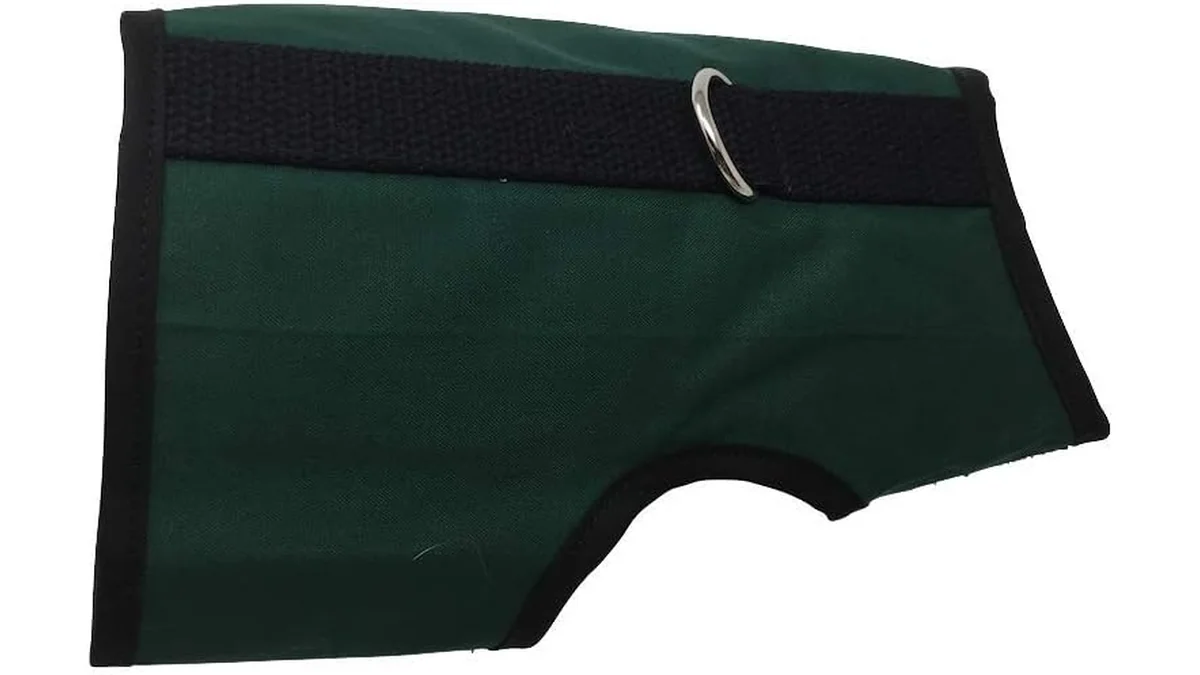
The Kitty Holster is where a lot of the owners we heard from ended up — after trying two or three other harnesses first.
| Material | Closure | Weight | Neck Buckle | Load Distribution |
|---|---|---|---|---|
| Cotton | Hook & Loop | 1.6 oz | ✗ | Vest |
The pattern we kept seeing: two or three other harnesses, each one escaped within minutes, then the Kitty Holster — and the problem stopped. The Velcro wraps around the whole body, so there’s no single gap for a cat to compress through. That’s the design feature every other harness on this list can’t fully replicate.
The material matters more than it sounds. Cotton doesn’t dig into the skin the way polyester mesh can, and we found a consistent pattern of owners noting a mild calming effect — the full-body coverage feels a bit like a gentle wrap. Kittens that freeze in strap harnesses often walk normally in this one from the first session.
The honest trade-off is the Velcro. It catches long fur aggressively and can be painful to peel off a longhaired cat. It collects hair fast and needs cleaning after every few sessions. For short-haired kittens, this is a non-issue. For long-haired breeds, it’s a real consideration.
What worked well
- Hardest to escape of everything we evaluated
- Freezing kittens often walk normally from day one
- Velcro closes in seconds with no clipping
What fell short
- Tears long fur on removal
- Neck piece too stiff for narrow-necked kittens
- Velcro fills with hair and needs frequent cleaning
Easiest for Kittens to Accept: Houdini (OutdoorBengal)
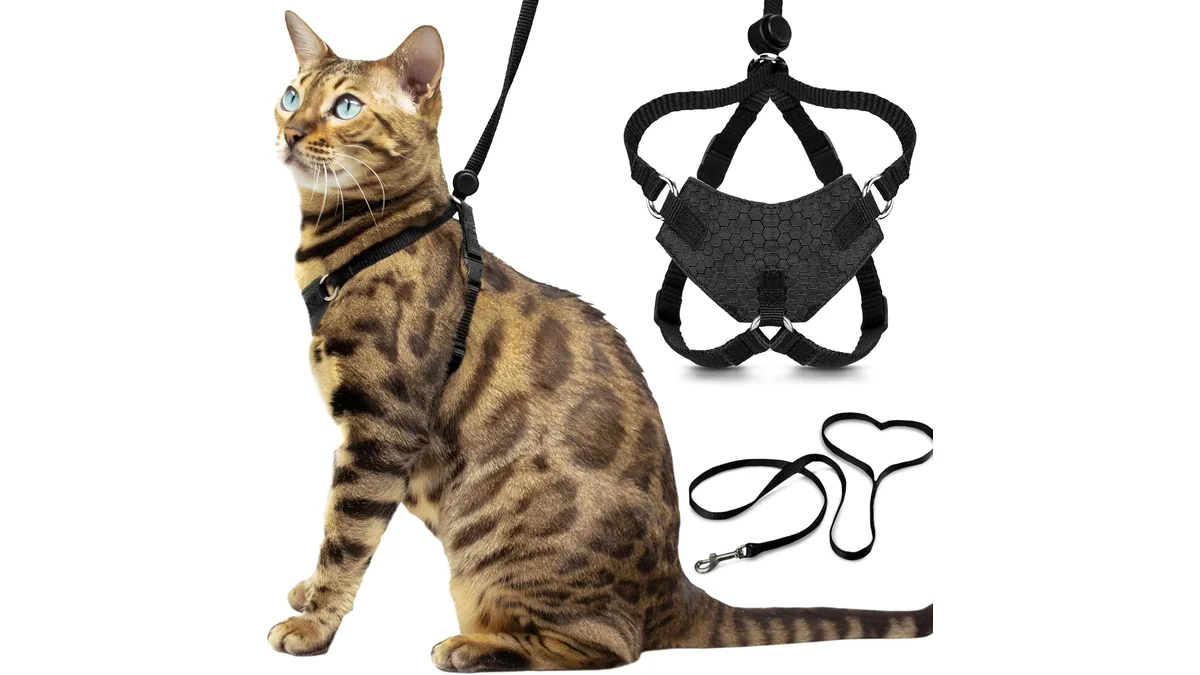
The Houdini is the harness kittens accept fastest — with one hardware trade-off worth knowing about.
| Material | Closure | Weight | Neck Buckle | Load Distribution |
|---|---|---|---|---|
| Mesh | Buckle + cord stopper | 2.89 oz | ✓ | Y-chest |
The Houdini’s Y-chest design puts no strap across the front of the neck. When the leash goes taut, the pressure lands on the chest — not the throat. In practice, that means a lot less choking when your kitten panics and pulls.
Kittens accept it faster than vest-style harnesses. Less fabric on the body means less for a nervous kitten to react to. What we found consistently: zero flopping or freezing — the “my cat walked normally from day one” reports are more concentrated here than anywhere else. The neck buckle clips cleanly, no leg-threading required, and the lightweight mesh disappears on a cat.
The problem is the cord lock and push-button clip. They break. We came across this repeatedly — owners replacing the unit three or four times over a single season. For occasional walks, this matters less. For daily outdoor sessions, the hardware is the weak link. The excess strap webbing on the back after adjustment also dangles, which bothers some cats.
What worked well
- Most kittens walk normally from the first session
- Clips on without pulling over the head
- Lightest harness on this list
What fell short
- Cord lock and clip break frequently with regular use
- Dangling back webbing bothers some cats
Lightweight Everyday Pick: Rabbitgoo
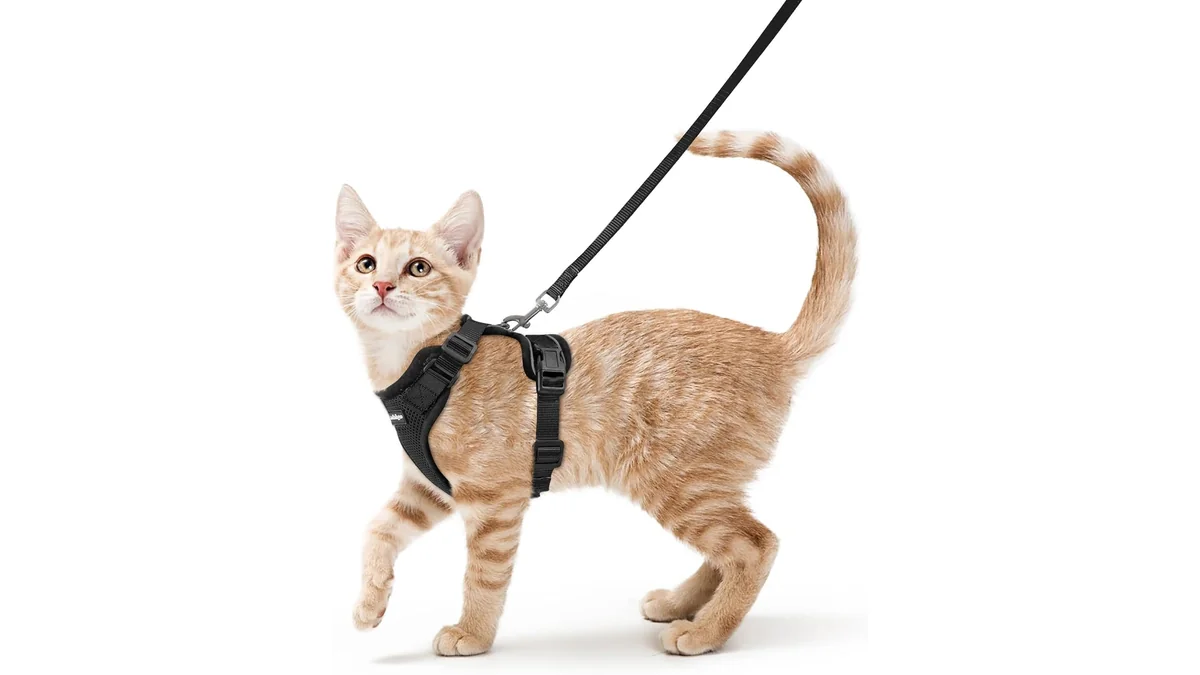
The Rabbitgoo sits at #1 in Cat Harnesses on Amazon for good reason — it works for most kittens when fitted correctly. But that “when fitted correctly” part matters more here than with any other harness on this list.
| Material | Closure | Weight | Neck Buckle | Load Distribution |
|---|---|---|---|---|
| Polyester air-mesh | Buckle | 4.16 oz | ✗ | Vest |
Once it’s on and correctly tightened, most kittens wear it comfortably for hours. The soft air-mesh breathes well, the buckles click smoothly, and the reflective strips add genuine practical value for dusk walks. Hardware hold-up is solid — better than the Houdini and PetSafe.
The catch is that buckles gradually loosen between sessions. Users who don’t recheck fit before going out find their kitten backed out of it within minutes. This isn’t a design flaw so much as a maintenance habit — but it means the Rabbitgoo demands more attention than the Kitty Holster.
The pull-over-head entry is the other friction point. For nervous kittens that resist having anything placed over their face, every outing starts with a small conflict. Once trained to it, most cats accept it without issue — but that initial window is harder than with the Houdini or Voyager.
What worked well
- Breathable mesh keeps cats comfortable for hours
- Reflective strips useful for evening walks
- Buckles click on and off quickly
What fell short
- No neck buckle so the head must be pulled through
- Buckles loosen between sessions and need re-tightening
- Mats fur under armpits on longhaired cats
No-Pull-Over Step-In Design: Voyager Step-In
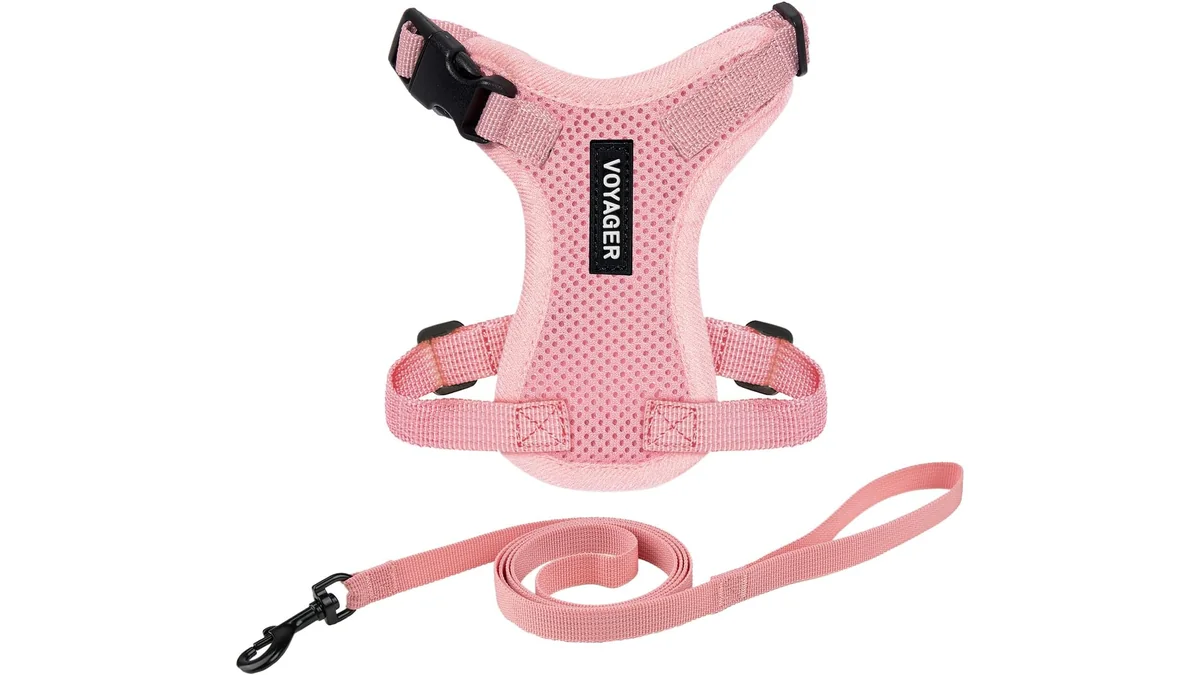
The Voyager Step-In solves the head-over problem without overcomplicating anything — which is exactly what many cat owners need.
| Material | Closure | Weight | Neck Buckle | Load Distribution |
|---|---|---|---|---|
| Polyester air-mesh | Buckle ×3 | 2.08 oz | ✓ | Vest |
The step-in design is exactly what it sounds like: two leg holes, the kitten steps in, three clips close across the back. Nothing goes over the head. For kittens that resist the pull-over entry specifically, this removes the problem entirely.
It doesn’t excel in any single area, but it doesn’t fall apart in any either. That consistency is useful — this is a reliable entry-level harness that covers the basics without costing much. At 2.08 oz it’s also the lightest pick in our top five.
The hardware is the caveat. All three clips rattle audibly when the cat moves, which startles some kittens on every walk. Clips also break or loosen with moderate use. Replacement cost is low; for a daily-use harness, it adds up.
What worked well
- Nothing goes over the head
- Light and breathable for extended wear
What fell short
- All three clips rattle when the cat moves
- Clips break with moderate use
Gentlest on the Chest: PetSafe Come With Me Kitty
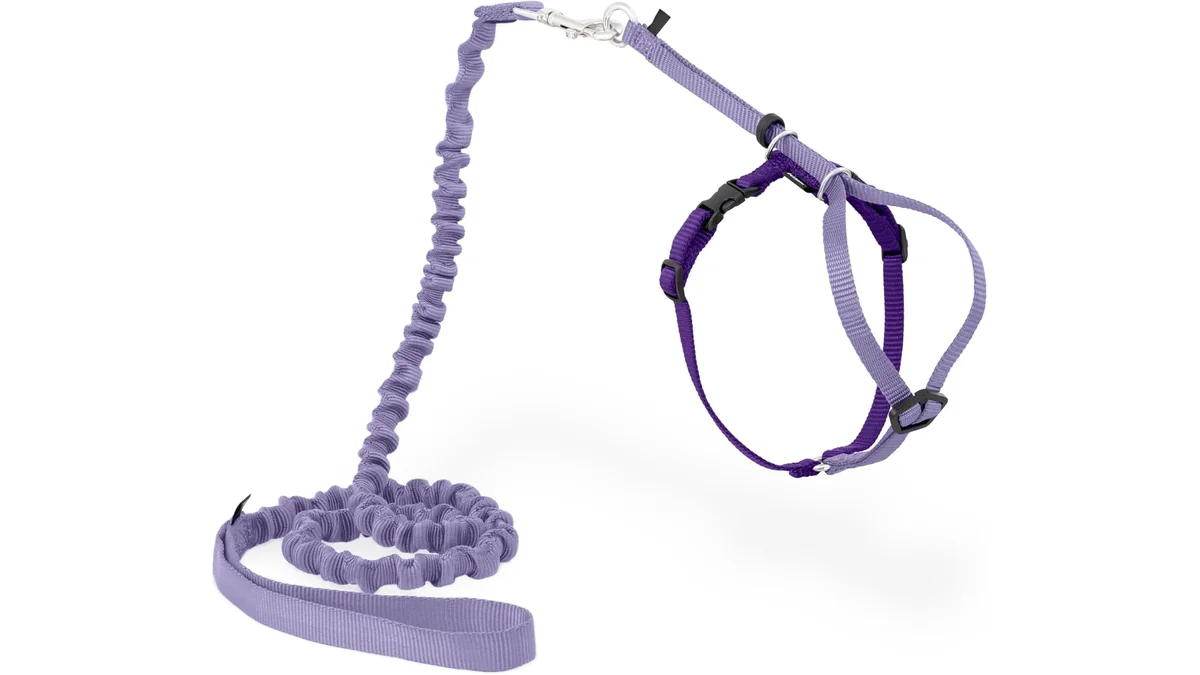
Of all five picks, the PetSafe Come With Me Kitty is the one cats seem to forget they’re wearing.
| Material | Closure | Weight | Neck Buckle | Load Distribution |
|---|---|---|---|---|
| Nylon | Buckle + rubber stopper | 4.8 oz | ✗ | Y-chest |
The figure-H strap spreads leash pressure across the chest and girth rather than concentrating it in one spot. Kittens prone to the initial freeze response walk more naturally in this harness than in most vest designs from early on. The martingale self-tightening loop adds a real layer of security when the rubber stopper sits where it should.
The rubber stopper is also the central weakness. It slides out of position during walks, causing the fit to loosen without any visible warning. A cat that was secure at the start of a session can work loose by the midpoint. Straps also fray with regular outdoor use faster than you’d expect from nylon.
The bungee leash that ships with this harness is genuinely praised on its own — it absorbs sudden lunges without yanking, which matters for young kittens still learning what a leash even means.
What worked well
- Cats move naturally in it from early sessions
- Bungee leash absorbs lunges well
- Martingale loop adds escape resistance
What fell short
- Rubber stopper slides out mid-walk without warning
- Straps fray faster than expected
- Many adjustment points make it hard to put on a struggling cat
What Kind of Harness Is Best for a Kitten?
Vest or Y-Chest — the Design Affects Your Kitten’s Neck
The marketing distinction between vest and Y-chest harnesses is usually framed as “full coverage vs. freedom of movement.” The real difference is simpler: where does the pressure go when your kitten pulls?
A vest harness wraps around the whole body. When the leash goes taut, the tension spreads across the chest and back — no single point takes all of it. That’s also why vest designs are harder to back out of: the same coverage that distributes pressure also closes off the escape route.
Y-chest harnesses use a single strap that runs between the front legs. Less fabric means less for a nervous kitten to react to on day one — which is why kittens tend to accept the Houdini and PetSafe faster. The trade-off is that the strap sits close to the neck. Research found that Y-chest designs restrict shoulder movement more than vest designs during walking — not less, despite how they’re marketed. For kittens that pull hard or startle easily, that’s worth keeping in mind.
Long-Haired Kittens Need a Different Shortlist
Velcro and long fur don’t mix. The Kitty Holster’s hook-and-loop closure is the strongest escape-prevention mechanism on this list and the worst option for Maine Coons, Siberians, Ragdolls, or any cat with a thick undercoat. Fur catches in the hooks on removal and mats under the armpits over time — one reviewer reports monthly trips to the groomer specifically for this.
For long-haired kittens, the Houdini’s minimal strap contact or the Voyager’s step-in mesh body causes significantly less friction at contact points. Neither is perfect — all harnesses create some armpit friction eventually — but both produce far fewer matting complaints from long-haired cat owners.
Full Side-by-Side Comparison
| Kitty Holster | Houdini (OutdoorBengal) | Rabbitgoo | Voyager Step-In | PetSafe Come With Me Kitty | |
|---|---|---|---|---|---|
| Material | Cotton | Mesh | Polyester air-mesh | Polyester air-mesh | Nylon |
| Closure | Hook & Loop | Buckle + cord stopper | Buckle | Buckle ×3 | Buckle + rubber stopper |
| Weight | 1.6 oz | 2.89 oz | 4.16 oz | 2.08 oz | 4.8 oz |
| Neck Buckle | ✗ | ✓ | ✗ | ✓ | ✗ |
| Load Distribution | Vest | Y-chest | Vest | Vest | Y-chest |
Products We Evaluated But Didn’t Recommend
The pidan Cat Harness uses a figure-8 neck strap — a single loop that crosses the front of the throat. When a cat pulls against the leash, all of that force goes directly to the neck. We found owners describing coughing fits during walks, and one cited a vet who explicitly advises against this harness style for cats that pull. For a kitten harness article where neck safety is a baseline requirement, that design pattern disqualifies it despite its lightweight appeal and easy fit.
The PUPTECK Soft Mesh Vest has a neck piece that runs disproportionately wide and stiff for the body it’s attached to. Narrow-necked kittens develop pressure points at the collar. A meaningful share of cats refuse to walk in it at all — not the normal initial resistance that fades with training, but sustained refusal that owners can’t get past. Nothing stands out enough to make it worth the trade-off.
The RC Pets Adventure Kitty has a fixed-length strap connecting the neck and chest sections. That strap is too short for most cats outside a narrow body-proportion range — it forces the chest section into the armpits and pushes leash force back toward the neck when the cat moves. The neck buckle added in a design revision helps, but the underlying fit problem remains. It’s the only product in our evaluation that generated more negative user experiences than positive ones.
How We Evaluated These Cat Harnesses
We looked at 17 harnesses that kept coming up across cat owner communities and review sites. To make the final pool, each product needed at least 200 Amazon reviews. Eight products made it through.
For each one, we read through hundreds of real owner experiences and scored every product across five areas: how well it keeps a kitten from escaping, how easy it is to put on, whether cats move naturally in it, how long the hardware holds up, and how much pressure the neck piece creates when a cat pulls. Every area came from what owners actually talked about — not a checklist we decided on in advance.
Everything in this article reflects those patterns. Not lab results, not our opinion.
Frequently Asked Questions
Is there a truly escape-proof cat harness?
No. Cats have a floating collarbone and extremely flexible shoulders, which means a frightened cat can compress her body and slip backward out of almost any harness. The goal is maximum resistance, not absolute prevention — and fit matters more than any single design feature.
What size harness does my kitten need?
Measure your kitten’s neck girth and chest girth with a soft tape measure, then add two fingers of slack. Most brands size by these two measurements, not weight. Weight ranges on product listings are rough guidelines — always check against the manufacturer’s actual girth measurements before ordering.
At what age can I start harness training a kitten?
The earlier the better. The American Animal Hospital Association (AAHA) and the American Association of Feline Practitioners (AAFP) identify the key window as 2 to 9 weeks of age — when kittens are most open to new experiences without forming lasting fear responses. Kittens that miss this window can still learn, but it typically takes longer and requires more patience.
My kitten hates the harness — should I keep trying?
Yes, with conditions. Flopping flat or refusing to move is normal in the first few sessions and usually fades with gradual exposure — wearing the harness indoors during meals or play, before any outdoor sessions. If your kitten shows signs of real distress (panting, hiding right after removal, dilated pupils) rather than reluctant tolerance, slow down. International Cat Care advises that the cat should always set the pace — never apply leash tension before a kitten is ready. The four indoor harness training phases are the fastest way to get there without setbacks.
How do I introduce a harness to my kitten for the first time?
Go in three stages before any outdoor session. First: leave the harness near your kitten’s food bowl for a few days — let her get used to the smell. Second: put it on indoors without a leash and let her move freely. Third: attach a light leash and hold it without pulling — let her lead. The Animal Rescue League of Iowa notes that cats don’t follow a leader the way dogs do; applying directional leash pressure too early triggers panic and can set training back weeks.
