

Finding a cat backpack that handles a city block is easy. Finding one that won’t wreck your shoulders three miles into a switchback trail — with your cat still calm inside — is a different problem entirely.
Most cat backpacks are designed for city errands. The straps are fine for a ten-minute walk to the vet. Load one up for a real hike, drop 2,000 feet of elevation, and the difference shows up in your lower back by the first rest stop. The ventilation situation gets worse the moment you step off the shaded path.
We went through 700 real user experiences — hikers who took these bags on actual trails, not just around the block — and scored every bag using our five-dimension scoring system to find out which backpacks hold up when the terrain gets serious and the temperature climbs.
Best Cat Backpacks for Hiking at a Glance
We narrowed 18 candidates down to 4 based on real hiker feedback — here’s who made the cut and why.
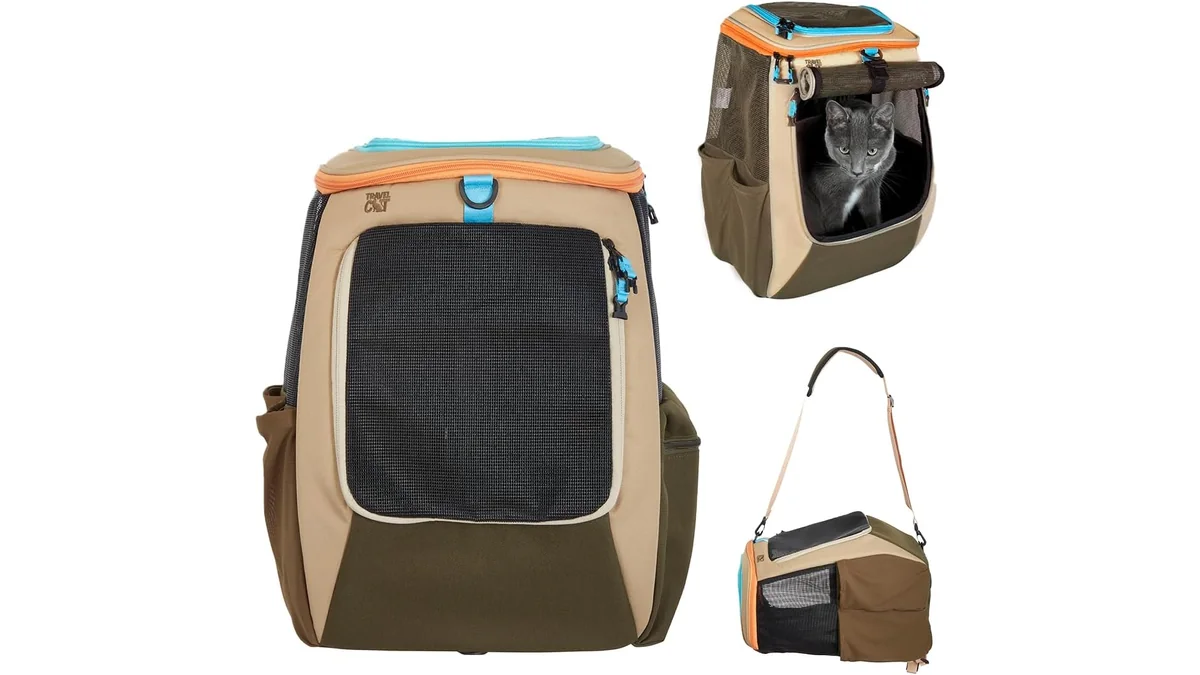
Travel Cat Navigator
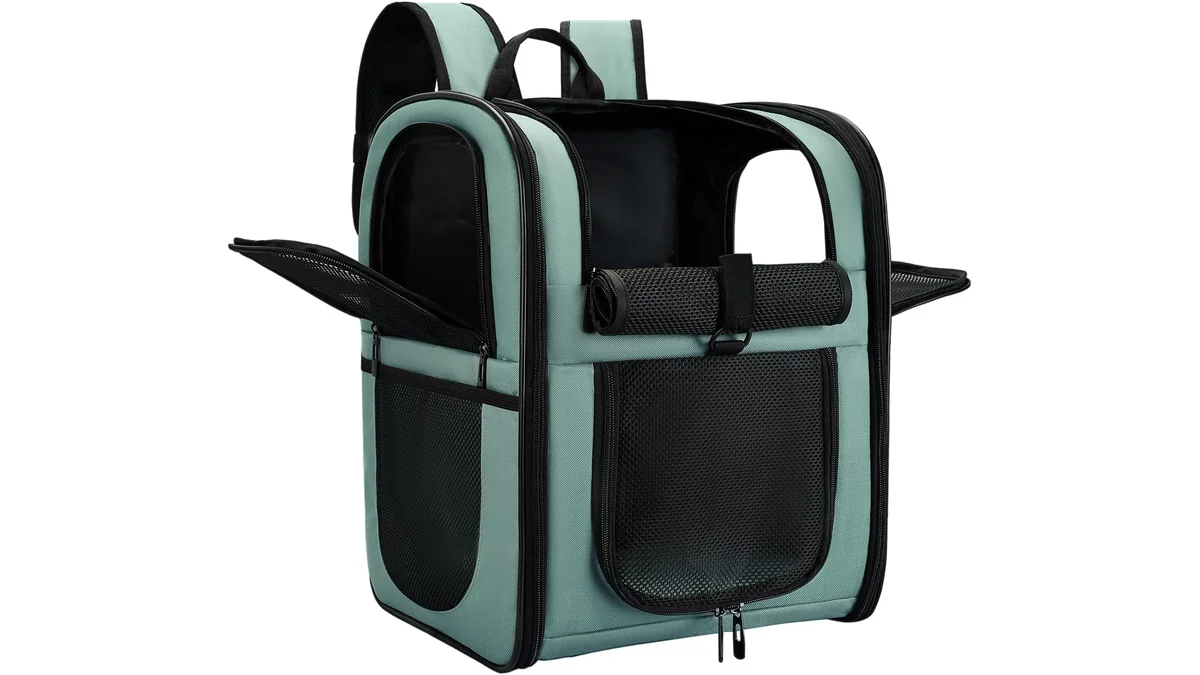
Apollo Walker Pet Backpack
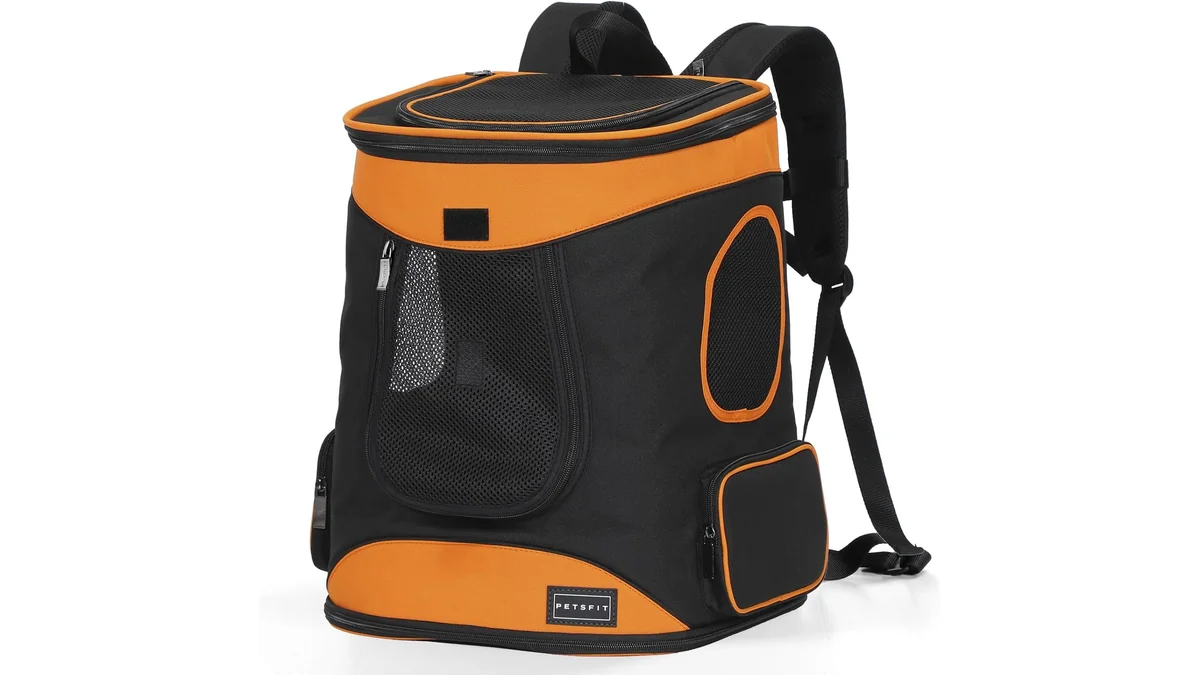
Petsfit Pet Backpack
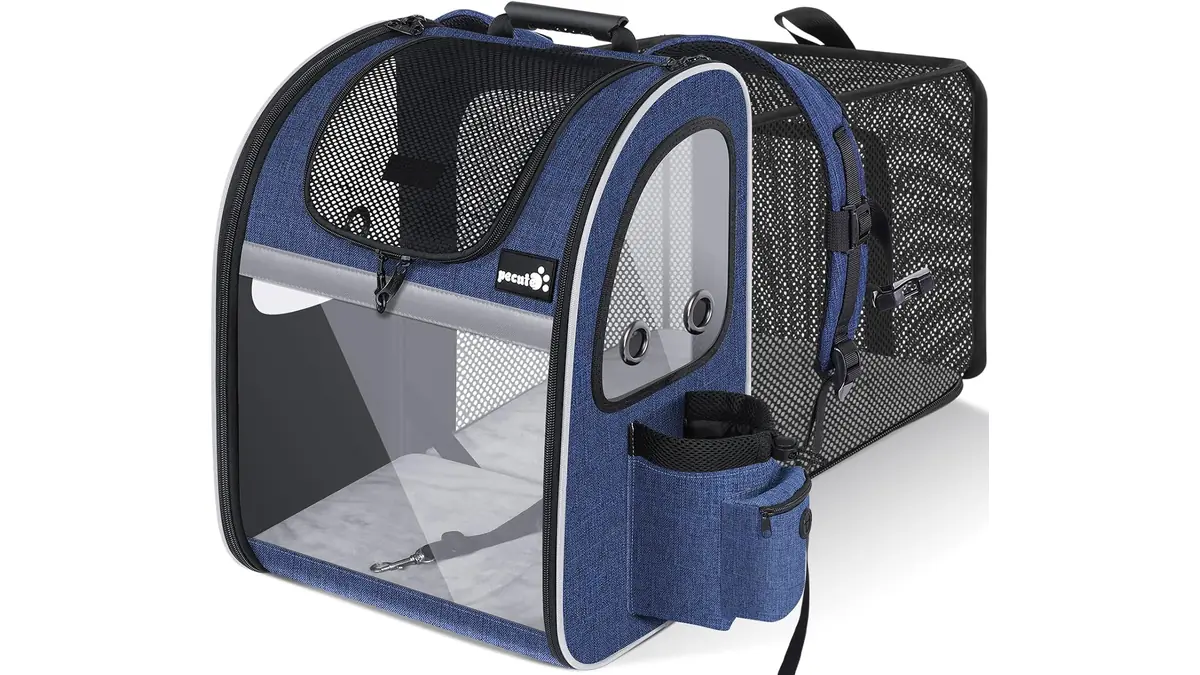
Pecute Pet Backpack
What Makes a Great Cat Hiking Backpack
After reading through hundreds of real hiker experiences, five issues came up again and again — the things that made people love a bag, or return it after one trip. These are the dimensions we used to evaluate every backpack in this guide.
Keeps Cat Cool
Cats don’t sweat effectively enough to cool themselves, which makes them more prone to overheating. On an exposed trail, a poorly ventilated backpack becomes a real problem fast — and unlike a city walk, there’s nowhere for you to step into the shade. Veterinary experts recommend multiple ventilation points on the pack, with nothing — not even your clothing — blocking them.
Comfortable to Wear Far
Hiking puts sustained load on your body that a vet visit never does. How the bag distributes your cat’s weight across your frame is what determines whether you finish the trail — or cut it short.
Cat Stays Secure
Out on a trail, your cat will encounter triggers they never face at home — dogs, wildlife, sudden sounds. Even the calmest cat will attempt escape when startled, and on a trail there’s no safe landing zone if they succeed.
Room to Lie Down
Your cat tolerates travel best when they can choose their own position. Lock them into one posture for hours and the stress builds quietly — until it doesn’t, usually somewhere around mile two.
Built to Last
Trail conditions stress your gear in ways a vet-visit bag simply isn’t designed for: repeated flex, brush contact, moisture. If you’re hiking regularly, you need a bag built to that standard from the start.
Best Overall: Travel Cat Navigator
| Material | Closure | Expandable tent | Airline compatible | Hydration bladder pocket |
|---|---|---|---|---|
| Polyester | Zipper + locking clips | ✗ | ✓ | ✓ |
Most cat backpacks look like hiking gear. The Navigator actually functions like it. The waist belt and structured frame move your cat’s weight off your shoulders and onto your hips — the same load-transfer principle used in proper hiking packs. What stood out to us: even petite hikers described the carry as comfortable across mountain terrain, which tells you something real about what a proper frame and waist belt actually does.
The interior comfort is unusually high for this category. Cats left alone with the Navigator at home will climb in and sleep — unprompted, repeatedly. That’s not a spec you’ll find on the listing, but we noticed this pattern across enough independent accounts to take it seriously.
Where the Navigator earns its price is zipper security. The locking buckle clips mean an escape-artist cat can’t nose the bag open mid-trail — a real concern most bags at this price don’t address. The honest tradeoff we’d flag: squared interior corners trap waste and are genuinely hard to clean after an accident.
What worked well
- Locking clips stop cats nosing bag open
- Frame holds shape on steep downhill sections
- Hydration bladder pocket built in for long hikes
What fell short
- Corners trap waste after accidents
- Waist belt too short for bigger body types
- Tether too short for cats to lie down
Maximum Airflow on Open Trails: Apollo Walker Pet Carrier Backpack
At a third of the Navigator’s price, the Apollo Walker has the largest interior of the four bags we evaluated — and more mesh coverage than anything else in this lineup, which matters most when you’re exposed on an open ridge.
| Material | Closure | Expandable tent | Airline compatible | Hydration bladder pocket |
|---|---|---|---|---|
| Polyester | Zipper | ✓ | ✓ | ✗ |
We kept coming back to the Navigator across every dimension we evaluated — locking zipper buckles, a hydration bladder pocket, and a rigid frame built for real mountain trails rather than the walk from the car park to the vet.
The ventilation advantage is structural: mesh on three faces means airflow doesn’t depend on which direction you’re facing — your cat gets cross-ventilation regardless. The interior is tall enough to sit upright and wide enough to turn around without pressing the sides.
The durability track record is hard to ignore. What we found across long-term accounts: this bag holds up to daily use over years, survives rough mountain terrain, and — in at least one documented case — came through flying off a car roof intact. For under $40, that’s not what we’d expect.
The honest gap is zipper security. The base model has no lockable zippers, so a determined cat can nose the bag open. A small carabiner through the zipper pulls solves it — but it’s a step worth taking before the first trail outing.
What worked well
- Mesh on three sides keeps air moving constantly
- Spacious interior lets cats turn around freely
- Expandable version includes rain cover
What fell short
- No lockable zippers on base model
- Bottom edge digs into lower back hiking
- Tether too long for small cats
Ergonomic Carry for Long Distance: Petsfit Pet Backpack Carrier
Of the four bags we evaluated, the Petsfit came closest to solving the long-distance carry problem — the waist and chest strap system genuinely transfers your cat’s weight to your hips in a way most bags in this category don’t bother with.
| Material | Closure | Expandable tent | Airline compatible | Hydration bladder pocket |
|---|---|---|---|---|
| Polyester | Buckle + zipper | ✗ | ✗ | ✗ |
The ergonomic advantage is real and measurable in practice. The waist belt does the job it promises — distributing load off your shoulders over sustained distance. Of the four bags we recommend, this is the one most likely to still feel manageable at the end of a long day, not just the start.
There’s also a feature we came across that doesn’t appear in the listing: remove the rigid bottom board and the bag compresses significantly — useful for fitting into tight spaces like car boots, tent vestibules, or overhead storage. It’s an unintended design benefit that long-term owners have come to rely on.
Where the Petsfit falls short is adjustability. The internal tether is fixed length — it can’t be shortened for a small cat or lengthened for a large one. For cats on either end of the size range, it’s worth checking before committing.
What worked well
- Waist belt genuinely moves weight to hips
- Machine washable with frame boards removed
- Side pockets fit essentials without bulk
What fell short
- Internal tether fixed and non-adjustable
- Chest strap too short for larger body types
Expands at Trail Rest Stops: Pecute Pet Carrier Backpack
The Pecute does something none of the other three bags here do: it converts from a closed backpack into an open mesh enclosure at rest stops, giving your cat genuine room to stretch out and decompress between hiking legs.
| Material | Closure | Expandable tent | Airline compatible | Hydration bladder pocket |
|---|---|---|---|---|
| 300D Cationic Oxford Cloth | Zipper + buckle + snap | ✓ | ✓ | ✗ |
The expand-at-rest-stop design solves a real problem we see repeatedly in long-hike accounts: cats who are fine for the first hour but increasingly restless by hour two. The closed backpack mode is compact and stable on the move; at a picnic stop or trailside break, the mesh tent opens up and gives your cat a proper space to reset. Cats left with this bag open at home consistently use the expanded section as a napping spot — a reasonable proxy for how it performs on the trail.
One thing worth flagging: the acrylic window variant looks like the premium option in the listing, but it runs hotter on sunny days than the mesh-front version. For any real sun exposure, the mesh variant is the one to get.
The expanded mesh section is also more delicate than the rest of the bag. It’s not designed to take claw pressure during active use — collapse it completely before moving.
What worked well
- Tent converts backpack to rest-stop enclosure
- Zipper clips prevent cats nosing openings
- Collapses completely flat for storage
What fell short
- Acrylic variant traps heat on sunny days
- Expanded mesh tears under active claw use
- Waist strap too short for larger body types
Full Side-by-Side Comparison
|
Best Overall
Travel Cat Navigator |
Maximum Airflow
Apollo Walker Pet Backpack |
Ergonomic Carry
Petsfit Pet Backpack |
Expandable
Pecute Pet Backpack |
|
|---|---|---|---|---|
| Material | Polyester | Polyester | Polyester | 300D Cationic Oxford Cloth |
| Closure | Zipper + locking clips | Zipper | Buckle + zipper | Zipper + buckle + snap |
| Expandable tent | ✗ | ✓ | ✗ | ✓ |
| Airline compatible | ✓ | ✓ | ✗ | ✓ |
| Hydration bladder pocket | ✓ | ✗ | ✗ | ✗ |
Products We Evaluated But Didn’t Recommend
The Kurgo G-Train is built around dogs: the interior is tall and narrow, and most of its owner reviews come from dog owners, which leaves too little evidence to recommend it for cats on the trail. It also tied for the weakest ventilation of the bags we scored — one owner’s pug overheated within minutes even in mild weather — which rules it out for hot, exposed hikes. Several owners also reported zipper pulls snapping and support rods that don’t stay in place.
The Roverlund looks spacious on paper — it’s marketed for pets up to 25lbs — but the center panels lack structural support and cave inward under normal use, effectively reducing the usable interior. Cats in the 13–20lb range were consistently cramped, and a zipper failure during transport was also documented.
The PETKIT Breezy Dome is built around a built-in fan, which is the reason most people buy it. The fan generates negligible airflow even at maximum speed. For hiking in sun exposure, the bag’s primary feature is non-functional, leaving you with an enclosed hard-shell carrier with worse passive ventilation than any mesh alternative in this guide.
The PetAmi Dog Backpack Carrier has a waist strap that sits too high for anyone over 5’7″, shoulder padding that becomes inadequate above 10lbs, and a base frame that digs into the lower back on longer hikes. The tether attachment point near the top opening also allows partially-clipped cats to partially escape — a design issue that disqualifies it for outdoor use.
How We Evaluated These Cat Hiking Backpacks
We started by identifying the bags that kept coming up across the internet — forums, discussion threads, recommendation lists. From that pool, we only kept bags with at least 200 people who had used and reviewed them, and a minimum Amazon rating of 4.0. That gave us 18 bags worth analyzing seriously.
From there, we read through 700 user experiences across Amazon, Reddit, Facebook groups, and specialist pet forums. We weren’t looking to confirm what the product listings claimed — we were looking for what went wrong, what held up, and what hikers actually noticed after miles on the trail.
The five dimensions we evaluated against — keeping your cat cool, carrying comfort over distance, security and escape prevention, interior space, and durability — weren’t chosen in advance. They surfaced from the language hikers used repeatedly across all those sources. When the same problem or praise appears across dozens of independent accounts from people who don’t know each other, that’s a signal worth building an evaluation around. The four bags in this guide are the ones that came out ahead when measured against all five.
Frequently Asked Questions
How do I keep my cat cool in a backpack on a hike?
Choose a bag with mesh on multiple sides — multi-sided mesh creates cross-ventilation regardless of wind direction — and keep your clothing off the vents. Take shade breaks every 30–45 minutes, and check on your cat often, as veterinarians advise. Watch for heatstroke signs: panting, drooling, lethargy, disorientation, or stumbling. If any appear, stop, move your cat into shade, and offer water before continuing. Overweight or thick-coated cats, and cats with heart or breathing problems, overheat more easily.
How much weight can a cat hiking backpack carry?
Most bags are rated for 15–25lbs, but the real question is how much you can carry over distance. A 15lb cat in a 4lb bag is 19lbs of sustained load. Bags with waist belts — like the Navigator and Petsfit — distribute that weight significantly better than shoulder-only designs.
Are cat backpacks safe for hiking?
It depends on the cat and the trail. Vets and cat welfare groups are cautious. Veterinary guidance on carriers warns that backpack-style designs don’t leave enough room for a cat to move comfortably and can feel unstable, and one major cat charity doesn’t recommend them at all, saying they’re too small for a cat to stand up, lie down, or readjust, and that the constant movement is stressful. If you still want to hike together, choose a bag your cat can turn around and lie down in, with mesh on several sides, locking zippers, and an interior tether clipped to a harness. Skip the backpack for anxious cats, hot and exposed routes, and long outings without breaks. If your cat is new to the outdoors, start with indoor harness training first.
How long can a cat stay in a backpack while hiking?
Most cats manage 2–3 hours in a well-ventilated bag with room to shift position. Regular rest-stop breaks make a meaningful difference — especially in a bag with an expandable enclosure like the Pecute. No consensus exists on a universal maximum; it depends on your cat’s temperament and interior comfort.
