
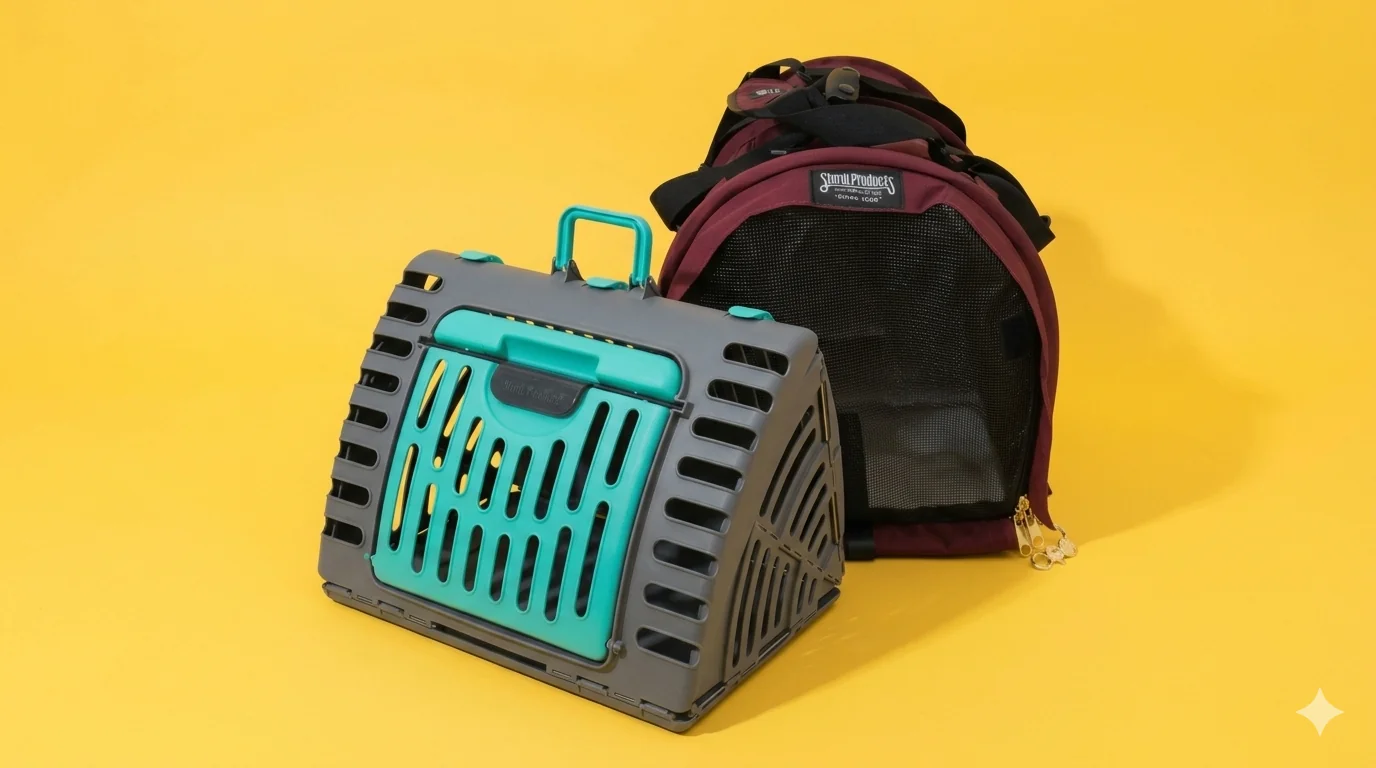
Most carriers labeled “large” aren’t. The interior runs 2 inches shorter than the listing, the weight limit describes the handle hardware — not how much cat fits inside — and the zipper that holds your 18-pound Maine Coon in is the same coil zipper on a $15 pencil case. For large cat owners, the labeling problem is the product problem.
We went through 305 user experiences and ranked every product on what actually matters for large cats. Four made it.
Best Cat Carriers for Large Cats at a Glance
We started with 32 candidates and narrowed to six for full scoring. Here’s a quick overview of the four that made the cut; details on each one below.
| Product | Best For | Editor Score |
|---|---|---|
| SportPet XL Hard-Sided Carrier | Best Overall | 4.2/5 |
| SturdiBag XL | Best for Travel | 3.7/5 |
| Petprsco Collapsible Dog Crate | Best for Road Trips | 3.6/5 |
| PEGIC Extra Large | Best Budget Pick | 3.0/5 |
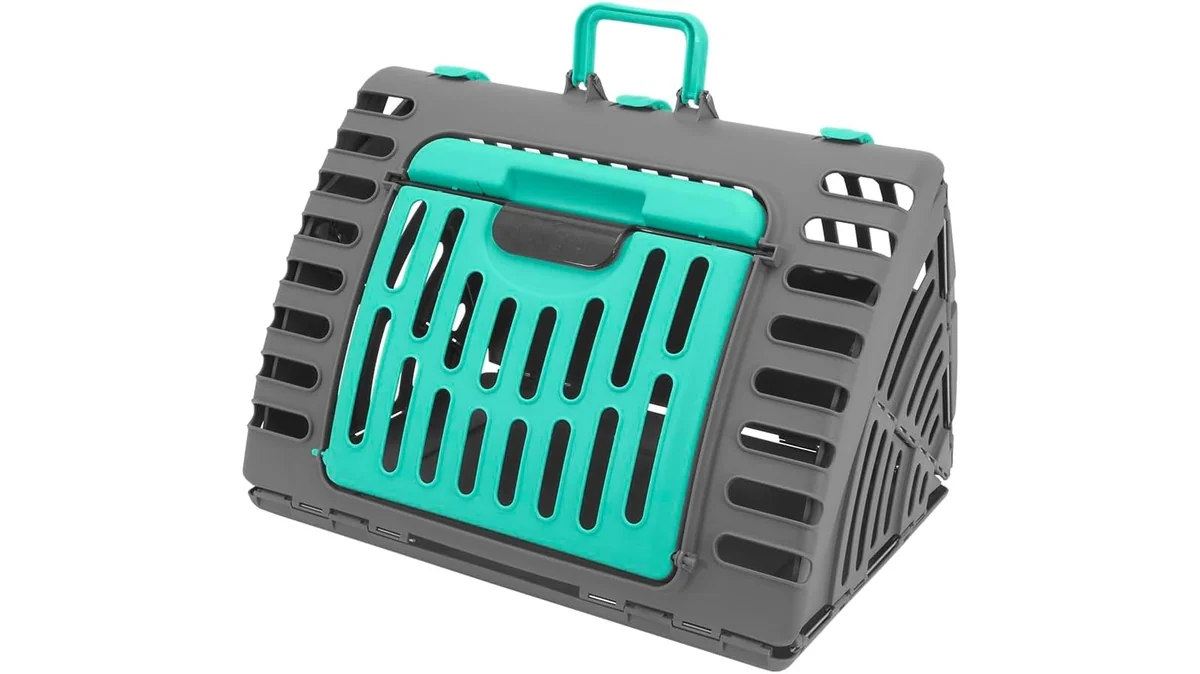
Large enough that a Maine Coon can stand upright and turn around without compressing against the walls.
The SportPet XL is the only hard-sided carrier in this evaluation, and for large cats, that distinction matters more than any other spec on the page.
- Weight Limit: 35 lbs
- Dimensions: 23.13″L × 18.75″W × 17.25″H
Who It’s Best For
The SportPet XL is the right choice if your priority is interior space and escape security. At 23.13 inches long and 17.25 inches high, it’s the largest hard-sided option in this evaluation — large enough that a Maine Coon can stand upright and turn around without compressing against the walls. The #1 Best Seller in Cat Hard-Sided Carriers on Amazon with 2,449 reviews at 4.7/5 — strongest market validation in this evaluation.
The side-opening door design — the entire front panel folds down — is particularly useful for cats that resist being loaded front-first into a dark opening. A reluctant cat can be guided in from the side rather than pushed in nose-first. Multiple Reddit users called this product out by name as the right pick for large cats.
What Reviewers Say
One verified owner used the carrier for 9 months of regular vet visits with a 16-pound long-bodied cat and reported “plenty of room” for the duration. The fold-flat storage and side-opening door earned repeated mentions as practical features for reluctant loaders.
One design gap worth knowing: if the carrier tips over, the latch can flop open and the door can be pushed out. No escape incidents appear in the review data, but it’s worth knowing.
Must-Know Caveat
Carrying ergonomics are genuinely poor over any distance. One owner described it clearly: the pyramid shape causes the carrier to swing against your legs with each step, and the handle position makes it impossible to carry close to your body. She ended up carrying it from the bottom with both arms — workable for a few minutes in a vet’s office, painful on a longer walk. Another owner noted that the off-center balance on the larger version tosses the cat around when picked up by the carry handle.
For car travel, this doesn’t matter — load the cat at home, slide the carrier into your back seat, done. For safe in-car placement without a crash-tested restraint, Cornell University’s College of Veterinary Medicine recommends the floor behind a front seat as the safest position.
You can manage a 16-pound cat solo without it swinging against your legs
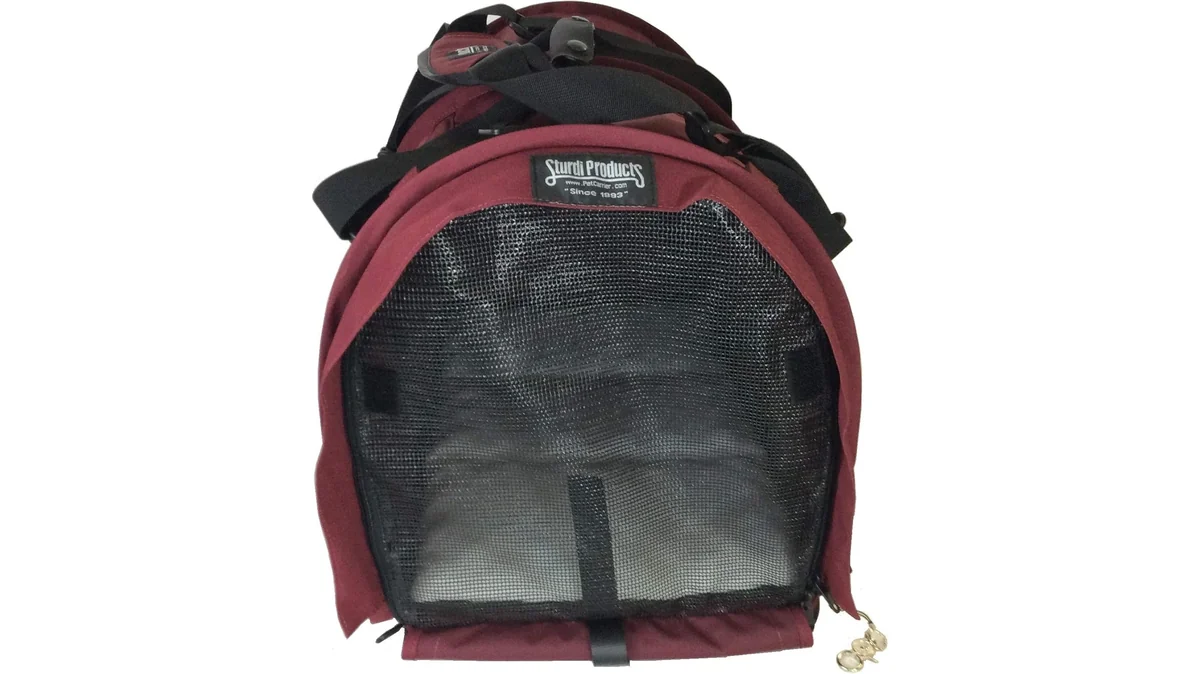
The SturdiBag XL is the only soft-sided carrier in this evaluation with carry ergonomics that genuinely work under load — four carry points, a structured internal frame, and a rounded shape that doesn’t swing against your legs.
- Weight Limit: 40 lbs
- Dimensions: 20″L × 12″W × 16″H
Who It’s Best For
The SturdiBag XL is built for owners who need to carry their cat on foot — through an airport, between a parking structure and a vet office, or any situation where the carrier is in your arms for more than a moment. The rounded shape and 4-point carry system mean you can manage a 16-pound cat solo without it swinging against your legs.
The 40-pound weight rating is legitimate for a soft-sided carrier — most max out at 25 pounds and mean it. The heavy-duty polyester shell is reinforced with safety clips rather than standard coil zippers, which reduces the risk of the closure failing under a large cat’s outward pressure.
If you’re considering a carrier for in-cabin airline travel with a large cat, the SturdiBag XL is one of the few soft-sided options with a rated weight capacity that covers cats in the 12–18 lb range. You won’t be turned away at the gate because your carrier can’t hold your cat’s weight. Verify current size requirements with your specific airline before purchase, as compliance standards vary.
What Reviewers Say
Cat breeders are the primary community that consistently recommends this product — one Reddit commenter specifically named it as what “all the cat breeders use.” Multiple owners confirmed it was easy to assemble and held up solidly over time.
One durability note: the internal frame rods are fragile enough that a small dog sitting on top of the carrier snapped them all. For a hard-using environment, factor that in.
Must-Know Caveat
The 12-inch width is a real limitation for long-bodied cats. One owner of a 16-pound Border Terrier called the “XL” label “hilarious” — comfortable enough, but not with any room to spare. For a Maine Coon or similarly built cat with body length over 18 inches, the SportPet XL or Petprsco crate will give them more usable space — the 12-inch interior width simply doesn’t allow a large cat to turn around fully.
There is also one isolated strap failure worth noting: one owner’s strap split on first use while the bag was held by another strap simultaneously. It’s a single report against a broader review record that shows no escape incidents, so it doesn’t change the security score — but inspect the strap stitching before your first use.
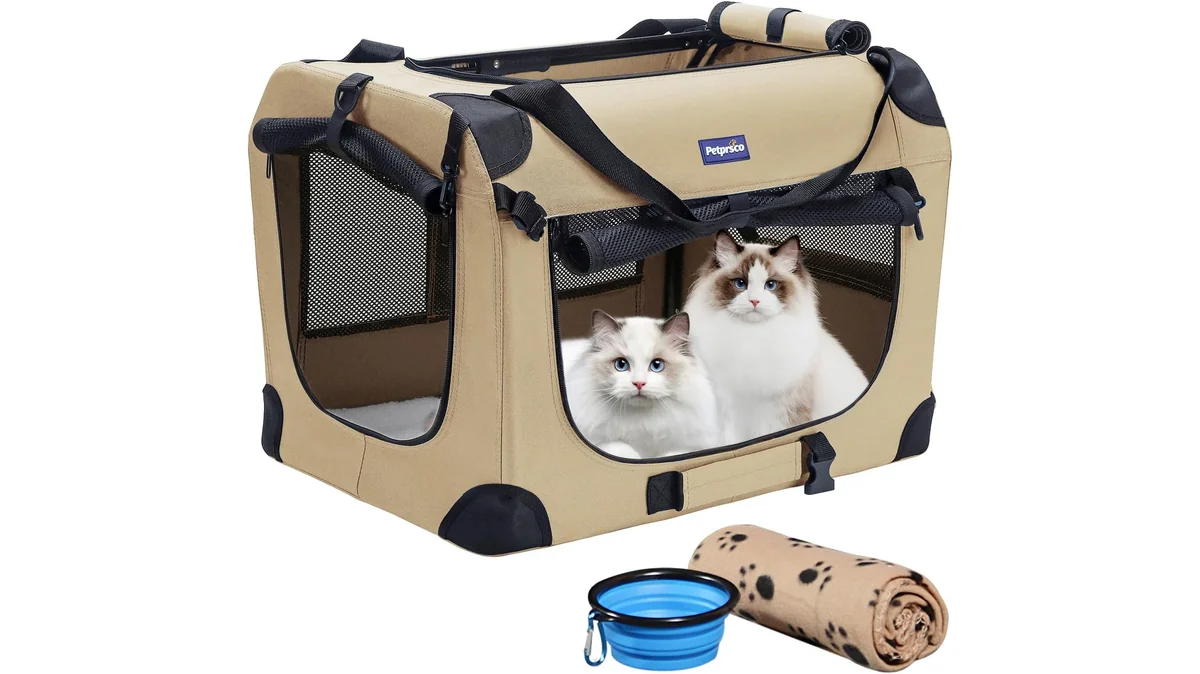
The 17-inch width gives a large cat genuine lateral space — the ability to shift position, stretch a leg, and adjust throughout the trip.
The largest interior volume of any carrier in this evaluation. The SPCA confirms that wire and plastic crates are a safe way to transport cats, as long as they are well-ventilated and large enough for the animal to stand, sit, lie down, and turn around.
- Weight Limit: 25 lbs (product page; description also states 12–30 lbs)
- Dimensions: 24″L × 17″W × 17″H
Who It’s Best For
This crate is designed to sit in your back seat or cargo area during a road trip — not to be carried through a vet office by a handle. The product description explicitly states it is “not suitable for compact cars,” which means before buying, confirm it fits your vehicle with the back seat down or in your cargo area.
For a multi-hour drive where your cat’s comfort matters more than portability, the 17-inch width gives a large cat genuine lateral space — the ability to shift position, stretch a leg, and adjust throughout the trip. Your cat gets room to actually move around, not just survive the drive. One Reddit owner uses it for a 9kg cat on back-seat road trips and described it as working “perfectly.” The pop-up assembly mechanism is simpler than most flat-fold competitors.
This crate is not suitable for air travel.
What Reviewers Say
With 2,540 reviews at 4.5/5, this has broad real-world validation across diverse pets and use cases. The spatial dimensions are verified and accurate. One thing worth flagging: the product’s own listing states both “12–30 lbs” and “max 25 lbs” — treat 25 lbs as the ceiling.
Must-Know Caveat
Smart cats can unzip it. At least one owner documented their dog self-opening the zipper within a few hours of unattended use. Cats are at least as likely to figure this out. If your cat is an active problem-solver, add a carabiner clip through the zipper pulls before closing the crate. For in-car placement, Cornell University’s College of Veterinary Medicine recommends the floor behind a front seat, or wedged against the seat back in the cargo area.
The 17-inch width gives a large cat genuine lateral space — the ability to shift position, stretch a leg, and adjust throughout the trip.
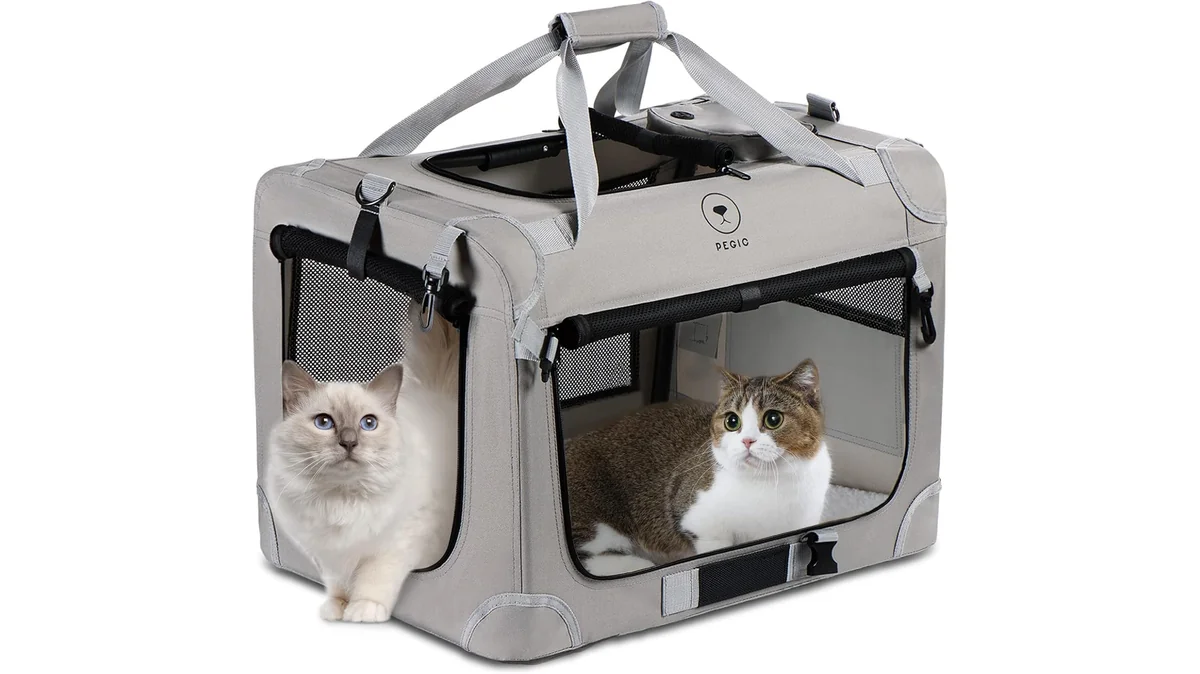
The PEGIC Extra Large has the interior space to house a large cat comfortably — 24″L × 16″W × 16″H. The trade-off is that you earn that space through a legitimately difficult assembly process and a carrying system that has documented failure reports.
- Weight Limit: 50 lbs
- Dimensions: 24″L × 16″W × 16″H
Who It’s Best For
The PEGIC is the right call if: (a) budget is a hard constraint, (b) you use it infrequently enough that re-assembly isn’t a regular battle, and (c) you don’t need to hand-carry your cat more than a short distance. At this price point, it’s the only option that gives a 19-pound Maine Coon genuine room to move. Multiple owners with cats in the 19-pound range confirmed comfortable fit. The seller has demonstrated willingness to make defective units right.
What Reviewers Say
Assembly is the recurring friction point. One owner was still troubleshooting at 4:29am. Another found she needed to brace one rod with her foot while pulling the other into place. A third solved this by leaving the carrier permanently assembled. If that’s your plan too, it works — but “assembles easily on demand” is not an accurate description.
Handle and shoulder strap durability is the other documented issue. One owner’s shoulder strap broke on first use with cats inside. Another owner’s handles ripped off after roughly 3–4 uses per year over two years.
Must-Know Caveat
The bottom frame collapse is a systemic defect, not isolated. Six or more independent verified purchasers all describe the same problem: the bottom frame won’t lock, or releases mid-use, causing the carrier to partially collapse with the animal inside. One owner put it plainly: “This carrier is not strong enough for my cats (that weigh 18 and 19 pounds).” If you buy this carrier, verify the bottom frame is locked before picking it up — every single time.
Full Side-by-Side Comparison
Specs Comparison
| Product | Dimensions (L×W×H) | Weight Limit | Material | Closure Type |
|---|---|---|---|---|
| SportPet XL | 23.13″×18.75″×17.25″ | 35 lbs | Hard polycarbonate + PP | Plastic latch, no zipper |
| SturdiBag XL | 20″×12″×16″ | 40 lbs | 600D polyester, internal frame rods | Safety clips + zipper |
| Petprsco Crate | 24″×17″×17″ | 25 lbs (max) | Fabric mesh over steel frame | Zipper |
| PEGIC Extra Large | 24″×16″×16″ | 50 lbs | Fabric mesh over rod frame | Zipper |
Products We Evaluated But Didn’t Recommend
The Catit Cabrio came up frequently in community discussions and earned a place in this evaluation at the highest price of any candidate. Multiple independent reviewers documented the same structural failure: the plastic clips that join the carrier’s top and bottom misalign or self-release, leaving visible gaps in the shell during transport. In one case the carrier fully disassembled while being lifted with a 23-pound cat inside — before the owner even left the house. At the highest price, the Catit delivers the smallest interior height (13.75″) and the worst assembly score of any carrier in this set. The top-opening design is genuinely useful at the vet, but it’s only worth considering if your cat weighs under 12 pounds and the snap-fit quality holds.
The Henkelion Large is the #1 result for “large cat carrier” on Amazon — 52,290 reviews at 4.6/5. That rating reflects the experience of small-cat owners, not large cat owners. Two systemic defects disqualify it for this use case. First, actual interior length runs approximately 2 inches shorter than listed: multiple verified purchasers independently measured 18 inches actual against the advertised 20 inches, and the product’s own listing footnote confirms the usable interior is 18″×12″×12″. Second, multiple owners documented zipper failures during transport, with at least two incidents resulting in cats partially escaping mid-transit — in one case a cat sustained nasal abrasions from extended mesh contact during a zipper failure on the first trip. A large cat exerting outward pressure is more likely to force a zipper failure and more harmed by the undersized interior. Both defects compound in exactly the use case this article addresses.
How We Scored These Carriers
Every score in this article is grounded in real owner experiences — 305 of them, across Amazon reviews and cat owner forums. We evaluated each product across six dimensions, with interior space and escape security carrying more weight than the rest.
One thing worth knowing before you read the scores: the weight limit printed on a carrier describes how much load the handles and base can bear — not how much cat fits inside. A carrier rated “fits 25 lbs” can be uncomfortably cramped for a 14-pound long-bodied cat. When we evaluated space, we went by what owners of large cats actually reported.
Frequently Asked Questions
What size carrier does a large cat need?
The International Air Transport Association requires that a pet must have enough space to stand, turn around, and lie down naturally inside its container. For practical sizing: measure your cat from nose to base of tail, add half the height from the ground to the elbow, and that gives you the minimum interior length. Most carriers labeled “large” fall short of this for cats over 14 pounds.
Is it safe to use a dog carrier for a large cat?
Yes. The SPCA confirms that plastic and wire crates are preferred transport options for cats, as long as they are well-ventilated and large enough for the animal to stand, sit, lie down, and turn around. The dog crate category consistently offers more interior volume than cat-specific carriers at equivalent or lower price points.
What kind of carrier is best for long journeys?
For long-distance car travel, a hard-sided carrier on the floor behind a front seat is the most stable option without a specialized restraint system. For in-cabin airline travel, a soft-sided carrier that meets your airline’s current size requirements is the only option — hard carriers aren’t permitted in the cabin. Managing a long drive with a cat involves more than just the carrier — stops, anxiety, and placement all matter.
Where is the safest place to put a cat carrier in the car?
Cornell University’s College of Veterinary Medicine advises placing the carrier on the floor behind either front seat when no crash-tested restraint is available. This limits how far the carrier can travel forward during sudden deceleration. If crash safety is a priority, the best cat carriers for long-distance car travel covers the options that have been independently tested for exactly that.
Why does my cat always seem too big for carriers labeled “large”?
Because weight capacity labels describe how much load the handles and base can bear — not how much interior space the carrier provides. The IATA specifies that carrier size must be based on the animal’s actual measurements, not commercial weight categories. A long-bodied 15-pound Maine Coon will be cramped in a carrier rated “fits 25 lbs” if the interior length is only 18 inches. The weight rating tells you nothing useful about fit.
Are soft or hard carriers better for large cats?
Hard carriers are safer in a vehicle — no zipper failure risk, and rigid walls contain a large cat more reliably under lateral pressure from the cat’s own weight. Veterinary professionals state that a hard-sided carrier should be used to ensure your cat’s safety during transport. The exception is in-cabin airline travel, where rigid carriers are prohibited in the cabin and a compliant soft-sided option is the only choice. If you’re choosing specifically for car travel, the SportPet XL is the hard-sided recommendation in this evaluation.
