
You’ve been there. The listing says 25 pounds capacity. Your cat is 14 pounds. The backpack arrives — and the interior is too narrow for her to turn around. “Weight limit” and actual fit are two completely different things, and almost nobody explains that before you click Buy.
We evaluated 18 backpacks in total, cross-referenced 1,700+ user experiences from Amazon, Reddit, and outdoor forums, and checked every manufacturer claim against actual owner reports. We focused on what cat owners actually regret getting wrong: structural security, carry comfort, ventilation, interior space, gear storage, and long-term durability.
The Apollo Walker came out on top. Here’s the full breakdown.
Best Cat Backpacks at a Glance
Each backpack was evaluated on what cat owners actually flag as purchase regrets — not marketing copy, not spec sheets.
| Product | Best For |
|---|---|
| Apollo Walker | Best Overall + Best Budget |
| Kurgo G-Train | Hiking Gear Storage |
| Pecute Expandable | Cats That Need More Room |
| Petsfit | Best Ventilation |
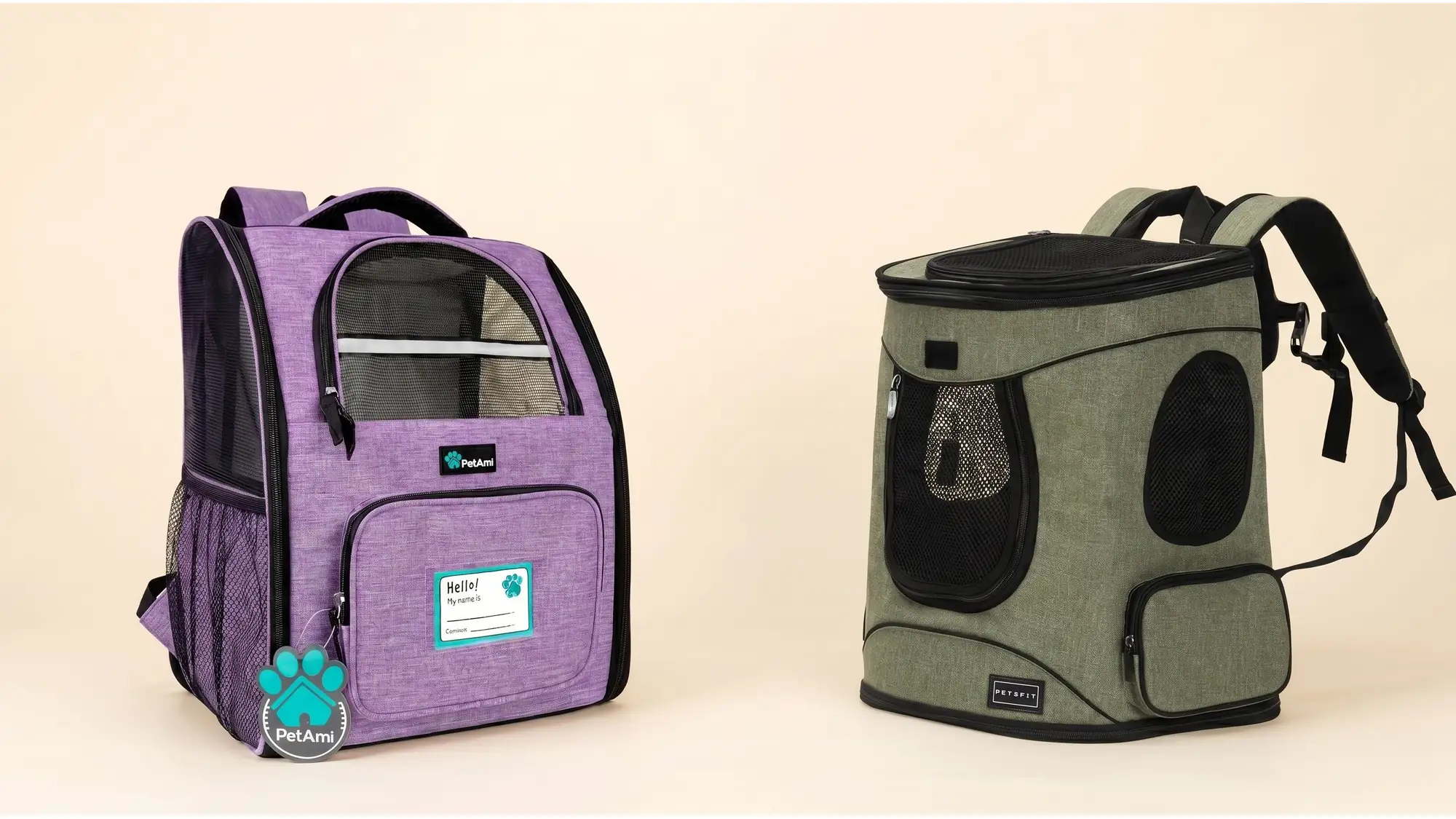
| PetAmi Deluxe | Airline Travel |
Apollo Walker — Best Overall + Best Budget Pick
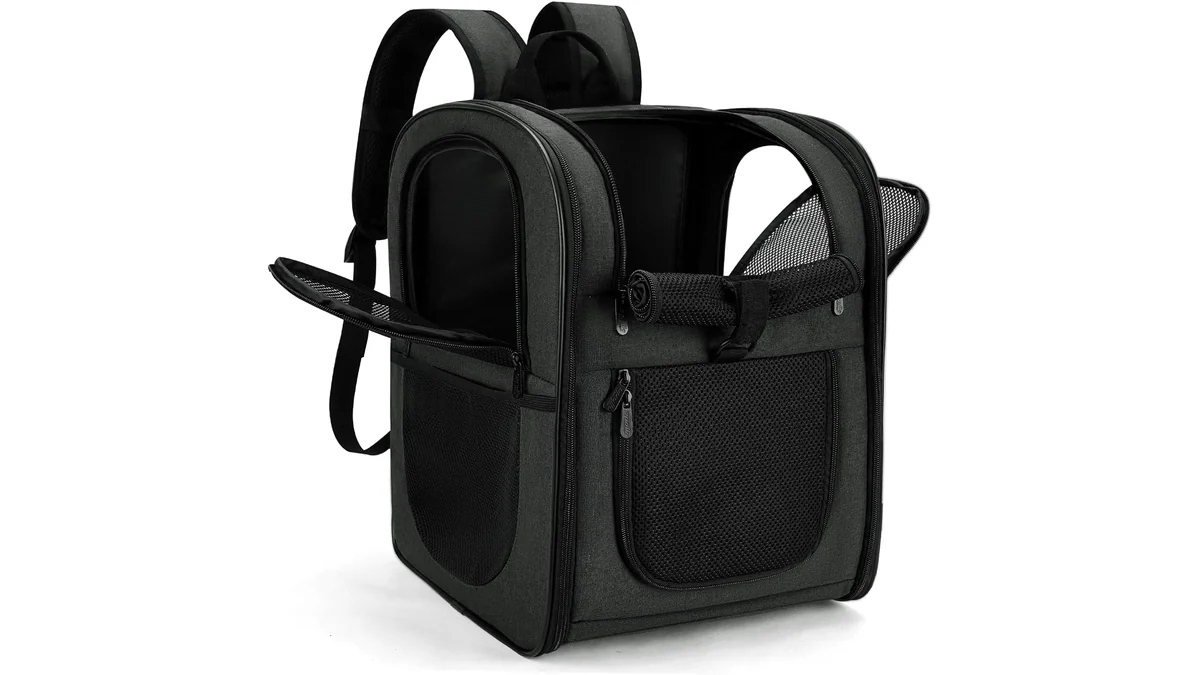
The best all-around cat backpack under $100, and it costs less than every other finalist.
- Weight Limit: 18 lbs
- Dimensions: 12.6″L × 11.4″W × 16.8″H
This backpack works for vet trips, neighborhood walks, and day hikes with cats up to about 14 pounds. One owner’s 16-pound dog walked in voluntarily, sat down, and waited to be zipped up — that says a lot about the design.
The side-entry door means your cat loads itself — no wrestling required
Instead of forcing your cat through a top opening, you unzip one full side panel and swing it open like a door. Your cat can step in on its own terms. That single design choice reduces loading stress for both of you.
Will the straps hold up on a longer walk, or will your shoulders pay for it?
Memory foam shoulder straps plus adjustable chest and waist straps handle weight distribution well. The one recurring issue: the structural base can contact your lower back on longer outings. A small foam pad behind the base edge fixes it. Known limitation at this price point — not a dealbreaker.
Can it actually hold an escape-artist cat?
Triple-layer construction — 800D fabric, claw-resistant mesh, and dual-lock zippers — held up under a determined escape-artist cat over months of regular use. The interior leash clip attaches to your cat’s harness, not collar — the American Association of Feline Practitioners notes that collar tethering during transport risks tracheal injury if your cat jumps.
One caveat: clip the leash to the harness before opening any panel outdoors. The clip runs slightly long in the side-open position and won’t fully prevent exit while unzipped.
What We Liked
- Side-door entry — the easiest loading experience of any backpack in this roundup
- Memory foam straps handle real weight without digging into your shoulders
- 800D fabric and dual-lock zippers held up to months of use by an escape-prone cat
- Cheapest recommended pick at $36.98 — no compromises that matter for most cats
What We Didn’t Like
- Interior (12.6″ floor length) is snug for cats over 14 lbs or long-bodied breeds
- Structural base contacts lower back on longer walks — requires a foam pad fix
- Leash clip doesn’t fully prevent exit when panels are open
Best for: Cats up to 13–14 lbs, vet trips, neighborhood walks, day hikes. If your cat is Maine Coon or Ragdoll-sized, look at the Pecute Expandable instead.
Kurgo G-Train — Best for Carrying Hiking Gear
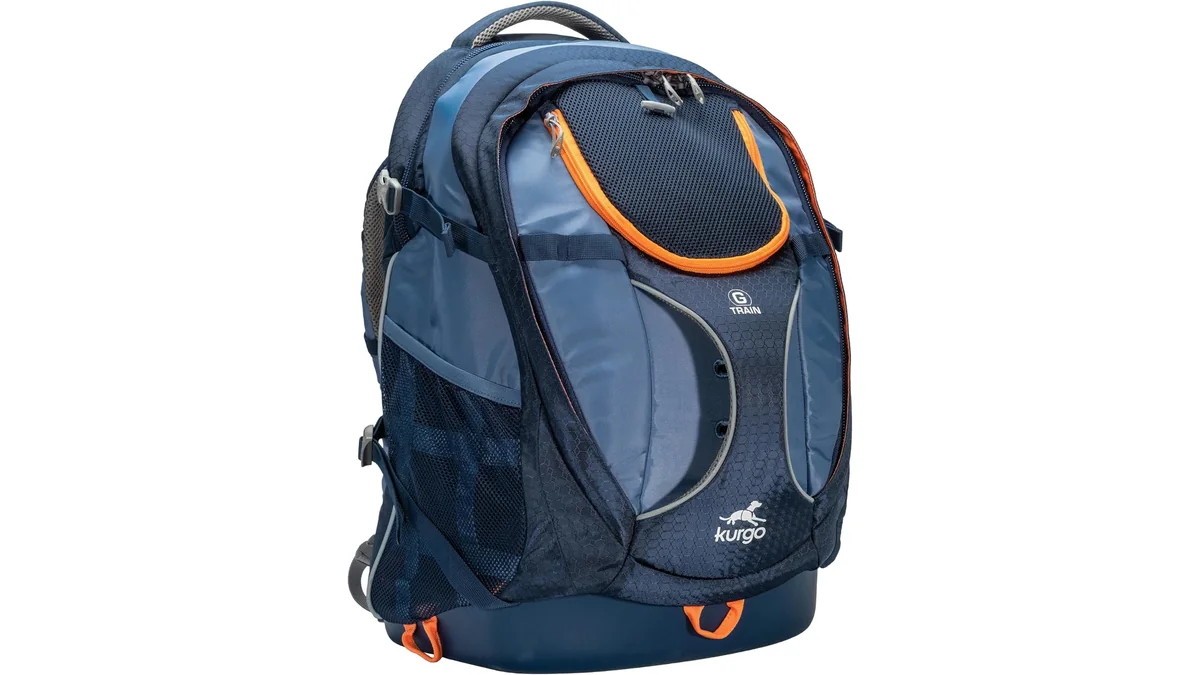
The only backpack in this pool built for serious trail hiking — waterproof base, hydration reservoir sleeve, and a lifetime warranty.
- Weight Limit: 25 lbs
- Dimensions: 14″L × 9.5″W × 20.5″H
If your idea of hiking is a 20-minute walk, the Kurgo is overkill. If you’re on actual trails — carrying water, working inclines, needing both hands free — this is the only backpack here that was designed for that. One owner uses it daily commuting with a 16-pound dog, reporting no structural failures over extended use.
Is this actually built for hiking, or just marketed that way?
The padded laptop sleeve built into the back panel acts as a buffer between the base and your spine — accidentally solving the lower-back contact problem that plagues cheaper backpacks. The lifetime warranty is manufacturer-backed and real.
Can you carry water, cat gear, and a reservoir without a second bag?
Two side pockets, a hydration bladder compartment, stow-away shoulder straps, and water bottle holders on each side. One owner fit a full 3-liter reservoir and still had cat space — though the reservoir does compress the cat compartment slightly. No other backpack in this roundup comes close to this storage load-out.
Does the interior actually fit a cat — or is it built for a dog?
The Kurgo’s interior is tall and narrow — designed around dog bodies, not cat bodies. Multiple cat owners found their cats couldn’t position themselves naturally inside the vertical column. If your cat is a compact sitter (most shorthairs, Persians, British Shorthairs), it works. If your cat sprawls, measure your cat’s sitting height against the 20.5″ interior before ordering.
What We Liked
- Only hiking-purpose-built backpack in the roundup — waterproof base, hydration sleeve, trail storage
- Padded laptop sleeve protects your back from the structural base
- Lifetime warranty from Kurgo
- 25 lb weight limit — highest of any finalist
What We Didn’t Like
- Tall and narrow interior geometry doesn’t suit sprawling cats
- Waist strap is less supportive than a proper hiking pack’s hip belt
- Significantly more expensive than every other pick
Best for: Owners who actually hike trails with their cats. Not worth the premium for vet trips or casual walks.
Pecute Expandable — Best for Cats That Need More Room
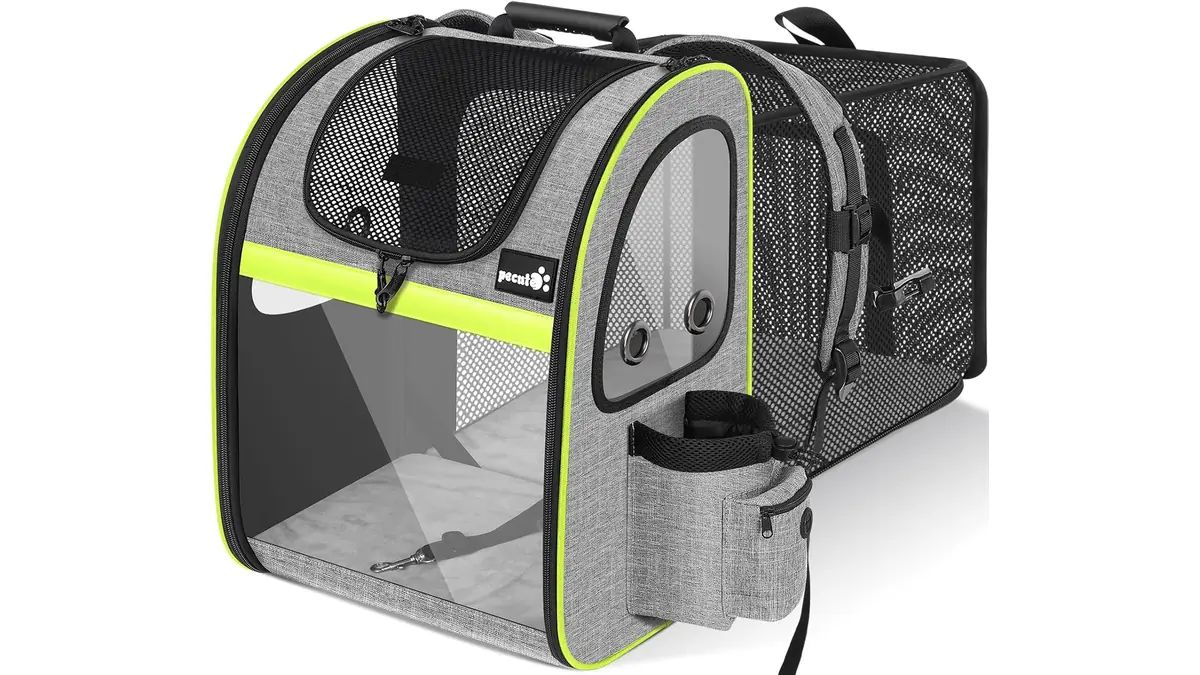
The most field-tested option in this roundup — 5,445 reviews — and the right pick for cats over 13 pounds who’ve outgrown a standard compartment.
- Weight Limit: 18 lbs (L size)
- Dimensions (expanded): 13.4″L × 24.4″W × 17.3″H
How much extra space does expanding actually give your cat?
The rear wall unzips and folds outward, supported by a carbon fiber frame and steel wire, creating a secondary compartment that roughly doubles the usable floor space. Your cat can stretch out during a vet waiting room visit, rest stop, or long car ride without being crammed. The expanded structure holds its shape on its own — it doesn’t need your cat’s weight to stay open.
Important: fold it back and zip it shut before walking. The expanded panel isn’t stable while worn.
One owner bought two XL mesh versions and used them daily for four months as cat lounging spaces — the expansion panel snapped back reliably even after repeated cat-collapse.
The acrylic window version can overheat your cat in 10 minutes
Get the mesh-window version, not the acrylic. The plastic panels trap heat — one owner’s cat showed sweaty paws after 10 minutes in the acrylic model at 70°F. The mesh version doesn’t have this problem. Same ASIN, different variant — check before ordering.
The zipper may fail in the first few uses
Zipper durability is the most-cited complaint across the reviews. Multiple owners report zipper failure within the first 2–4 uses. Pecute offers a 1-year warranty and 90-day money-back — use it immediately if a zipper fails early.
What We Liked
- Expanded configuration gives large cats genuine floor space to stretch out
- Most-reviewed backpack in this roundup — 5,445 reviews, the deepest reliability data
- Affordable at $47.99 for what you get
- 1-year warranty + 90-day money-back
What We Didn’t Like
- Zipper failure within first few uses — documented across multiple independent reviewers
- Acrylic window version creates a heat trap (order mesh instead)
- Must close expansion before walking — can’t be worn expanded
Best for: Cats over 13 lbs, or owners who want a dedicated rest-stop compartment on longer outings.
Petsfit — Best Ventilation
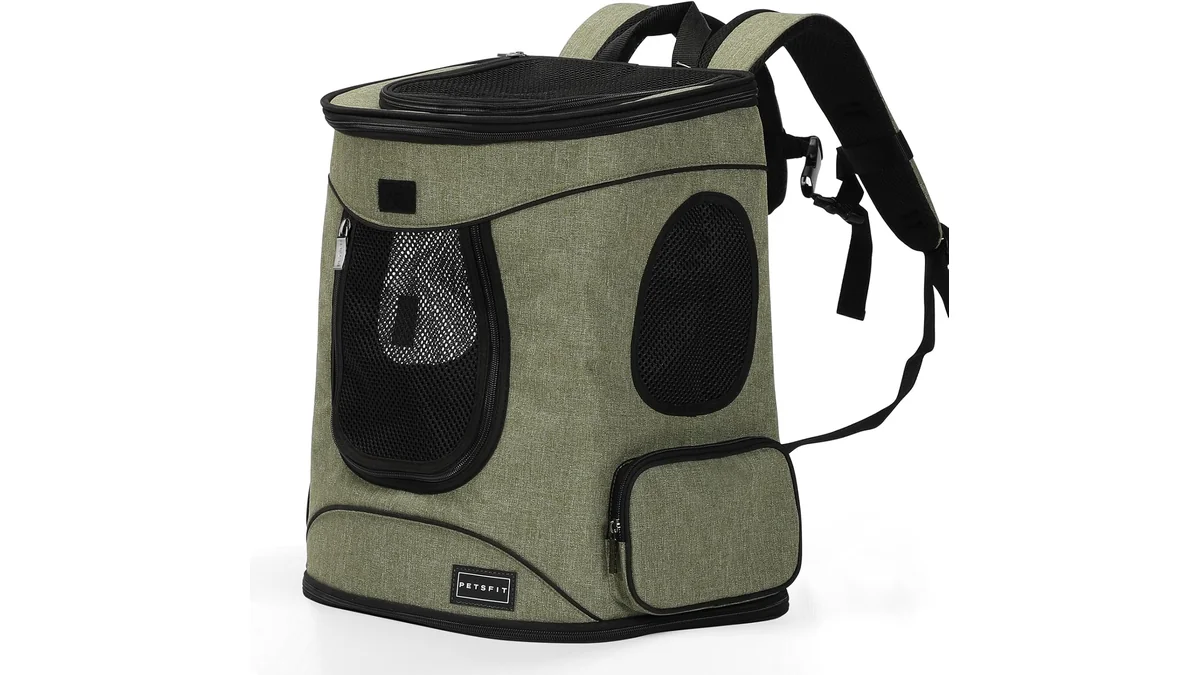
Four-sided mesh construction, no plastic panels in the airflow path — the most breathable option in this roundup.
- Weight Limit: 18 lbs
- Dimensions: 13.5″L × 12.5″W × 17.5″H
If your cat runs hot — dark fur, a breed prone to overheating, or you live somewhere warm — airflow matters more than any other spec. The Petsfit’s four mesh windows (two sides, top, and front) create continuous cross-ventilation that nothing else at this price matches. No overheating complaints appear anywhere in the review data, which stands out given how many other backpacks have this problem.
Why does four-sided mesh actually matter for your cat’s safety?
Cats can’t sweat across their bodies — they cool down by panting and through vasodilation in their ears and paw pads. If air can’t move through the carrier, that cooling system stops working. The American Association of Feline Practitioners recommends mesh on at least three sides for safe transport. Petsfit exceeds that with four.
The rigid base will bruise your lower back on walks longer than 30 minutes
Here’s the catch: the base contacts your lower back while walking. Consistently enough that it’s driven 2-star reviews since 2016 — bruises after a 3-hour walk, hip contact within half a mile. The chest and waist buckles help but don’t solve it.
Storage is minimal — two side pockets, no water bottle holder, no rain cover. Multiple owners ended up buying a separate fanny pack for trail basics.
What We Liked
- Four-sided mesh is the best ventilation of any backpack in this roundup
- No overheating complaints in the entire review pool
- Mid-range price at $58.65
What We Didn’t Like
- Rigid base contacts your lower back — a consistent complaint since 2016
- Very limited storage — no water bottle holder or rain cover
- Not suitable for outings longer than 30 minutes
Best for: Warm climates, cats that overheat easily, short outings. Not the right call for trails or long walks.
PetAmi Deluxe — Best for Airline Travel
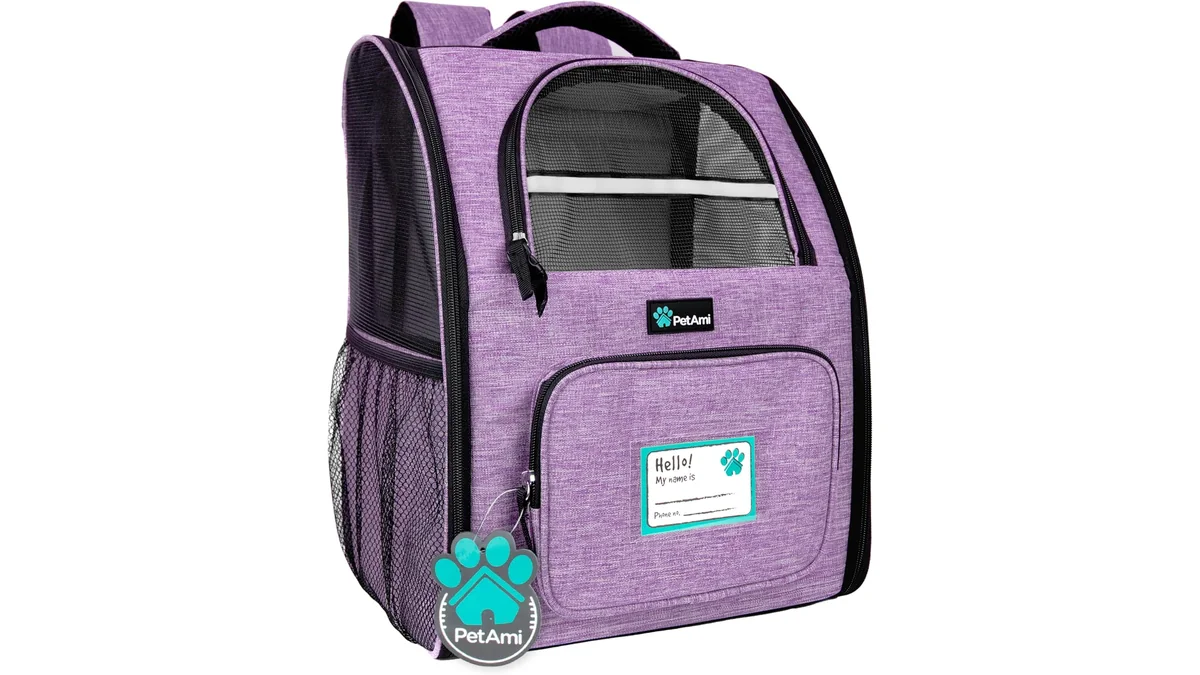
The only TSA-approved backpack in this roundup with a side-entry door.
- Weight Limit: 18 lbs
- Dimensions: 12.5″L × 10.2″W × 16.3″H
If you need to fly with your cat and want a backpack instead of a traditional soft carrier, the PetAmi is your pick. TSA approval means it meets the dimensional requirements most major airlines publish for under-seat carry-on. One owner confirmed it on JetBlue from New York to San Francisco.
TSA-approved doesn’t mean it fits on every flight
TSA approval is not a universal pass. Several reviewers found the PetAmi too tall to clear the space under American Airlines window seats on Boeing 737s — life-vest boxes reduce vertical clearance on those aircraft. Request an aisle or middle seat, and verify with your airline before traveling.
The “18 lb weight limit” is not how much your cat can weigh comfortably inside
The interior is the smallest of the five finalists. The 18 lb “weight limit” is the fabric’s structural capacity — not how much your cat can weigh comfortably inside it. For most adult cats over 12 pounds, the cat can’t fully stand up and turn around with the top zipped. The PetAmi is genuinely comfortable for cats up to about 10–11 lbs. For larger cats, look at the Pecute Expandable.
The interior tether clip breaks under the force of a determined cat jumping — multiple independent owners report this failure on first use. For flights, clip your cat’s harness before any door opens. Don’t rely on the tether as your primary containment.
What We Liked
- TSA-approved and confirmed on major domestic routes
- Side-entry door — easier loading than most airline carriers
- Affordable at $39.99
- Two-way entry design
What We Didn’t Like
- Smallest interior of the five finalists — not suitable for cats over 11 lbs
- TSA approval doesn’t guarantee fit on every aircraft or airline
- Interior tether clip breaks under jump force
Best for: Cats under 11 lbs who fly frequently. Verify your airline’s specific under-seat dimensions before every trip.
Full Side-by-Side Comparison
| Product | Dimensions (L×W×H) | Weight Limit | Material | Entry Type | Expandable |
|---|---|---|---|---|---|
| Apollo Walker | 12.6″×11.4″×16.8″ | 18 lbs | 800D Polyester | Side door (full panel) | No |
| Kurgo G-Train | 14″×9.5″×20.5″ | 25 lbs | Nylon | Top + side | No |
| Pecute Expandable | 13.4″×24.4″×17.3″ (expanded) | 18 lbs (L) | 300D Oxford | Side + back + top | Yes |
| Petsfit | 13.5″×12.5″×17.5″ | 18 lbs | 600D Oxford | Top + front | No |
| PetAmi Deluxe | 12.5″×10.2″×16.3″ | 18 lbs | 600D Polyester | Side (2-way) | No |
Products We Evaluated But Didn’t Recommend
The Fat Cat Backpack Carrier appeared in several competitor roundups, but the bubble dome detaching isn’t a production defect — it’s a systemic failure reported across multiple independent reviewers at different purchase dates. The dome unscrews under cat paw pressure or minimal vibration. The interior safety clip snapped under a single startled jump. A detaching dome mid-walk means a direct escape path — that’s a dealbreaker regardless of what else the carrier does well.
The Texsens Bubble Backpack is Amazon’s #1 bestseller in the category with 17,398 reviews. The mesh construction fails through claw contact within the first few uses — a 6-month-old kitten ripped a 3–4 inch hole on her first day, and multiple other owners independently report the same failure. The PVC dome also creates a real overheating risk: transparent plastic traps heat the way a greenhouse does, and small ventilation holes can’t compensate.
The ibiyaya Double Decker has a compelling pitch — two compartments, or one large cat with extra space. The second-deck shelf collapses under a 10-pound cat’s weight during extended trips, dropping the cat into the bottom compartment repeatedly on a 5-hour trip. The product’s core feature doesn’t reliably work — that’s enough to exclude it.
The pidan Expandable Backpack has the largest interior of the group fully expanded (15″×15″×23.2″), but the bottom panel sags under cats over 12 pounds, undermining the one thing you’d buy it for.
A note on the Travel Cat Navigator: The Navigator is one of the most frequently recommended cat backpacks in the community, and it came up repeatedly in our research. We didn’t include it in this evaluation because it didn’t have enough Amazon reviews at the time of data collection to assess reliability patterns consistently. That’s not a knock on the product — it just means we don’t have enough owner data to evaluate it fairly alongside the others. We’ll be collecting dedicated review data on the Navigator and will cover it in a future update.
How We Evaluated These Backpacks
For each backpack, we looked at the same things: how well it contains an escape-prone cat, how comfortable it is to carry on a human body, how well it ventilates, how much usable space the cat actually has, how much gear you can bring along, and whether it holds up over time. Escape security and carry comfort got the most weight, since those are the two things owners most often wish they’d researched before buying.
Data came from 1,700+ user experiences across Amazon, Reddit (r/adventurecats, r/CatAdvice, r/hikinggear), and the Camping With Cats Facebook group. Every conclusion traces to a specific reviewer or data point — no spec-sheet extrapolation, no aggregate star ratings.
What this evaluation didn’t include: hands-on testing. The data comes from owner reports, not personal use. That’s a different kind of evidence base — broader in scale, but not the same as field testing.
Ready to pick? If you’re not sure where to start: the Apollo Walker handles most cats and most use cases at the lowest price. If your cat is over 13 lbs, go Pecute Expandable (mesh version). If you hike with water and gear, the Kurgo G-Train has the storage for it — as long as your cat is a compact sitter.
Frequently Asked Questions
Are cat bubble backpacks safe?
Bubble backpacks — the ones with a clear plastic or acrylic dome — are not safe in warm weather or direct sunlight. Transparent plastic traps infrared heat the same way a greenhouse does, and small air holes can’t compensate for that buildup. According to atmospheric physics research from the National Oceanic and Atmospheric Administration, a dangerous heat environment can develop inside a poorly ventilated plastic enclosure in under 30 minutes of sun exposure. Mesh backpacks, where most of the wall surface is breathable fabric, don’t have this problem.
What weight limit can a cat backpack actually handle?
The advertised weight limit tells you how much the fabric and stitching can hold — not how comfortably your cat can sit inside. According to aviation and veterinary guidelines, a carrier is only usable if your cat can stand up, turn around, and lie down within the closed interior. In practice, most backpacks marketed as “18 lb capacity” are genuinely comfortable for cats up to 12–13 lbs. At 14–16 lbs, check actual interior dimensions against your cat’s body length before ordering.
Can you take a cat backpack on a plane?
Yes, with caveats. Major airlines cap soft-sided carriers at approximately 18″L × 11″W × 11″H for under-seat carry-on, though this varies by airline and aircraft. Southwest allows 18.5″×13.5″×9.5″; JetBlue’s height limit is 8.5 inches, which eliminates most backpacks that don’t compress. Expandable backpacks often fail compliance because internal wire frames prevent the bag from compressing enough. The PetAmi Deluxe is TSA-approved and confirmed on major domestic routes — but always verify your specific airline’s requirements before flying.
What size cat backpack do I need for a large cat?
For cats over 13 pounds, measure your cat’s body length (nose to tail base) and compare it to the carrier’s interior floor length — not the exterior dimensions. Most backpacks labeled “18 lb capacity” have interior floors of 12–13 inches, too short for a stretched-out 14-pound cat. The Pecute Expandable’s deployed configuration (24.4″ wide × 13.4″ long) gives large cats genuine room. For very large cats, hard-sided carriers offer interior volumes no backpack in this category can match.
How do I get my cat used to a backpack?
Leave the backpack open on the floor in a room your cat uses regularly, and put treats inside every day with zero pressure to enter. The goal is making the backpack part of the environment before it ever moves. Veterinary behaviorists recommend this desensitization process takes weeks, not days — the same carrier acclimation phases used for harness training apply directly here, since the behavioral mechanics are identical.
